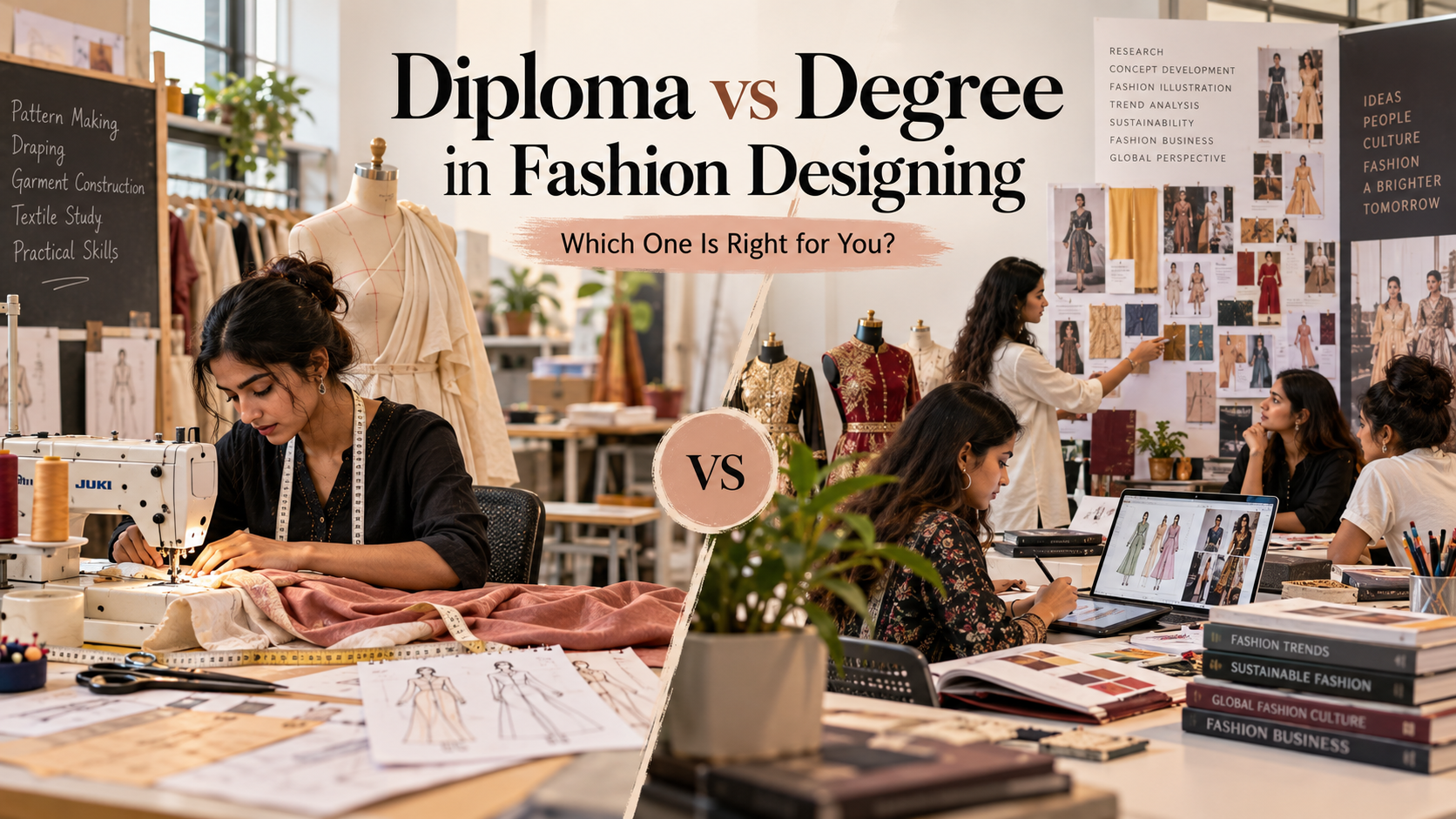
You have decided to study fashion design. The next question is whether you should choose a fashion design degree or a shorter diploma in fashion designing.
Both can lead into the fashion industry, but they serve different purposes.
A degree generally provides more time to explore design, technical skills, research, industry projects and specialisations. A diploma is usually shorter and more concentrated, often focusing on practical skills.
Neither option is automatically better. The right choice depends on your career goals, time, budget, previous education and the quality of the programme.
What is a diploma in fashion designing?
A fashion design diploma is generally a shorter programme focused on practical and creative skills.
Depending on the institute, it may cover:
- Fashion illustration
- Pattern making
- Garment construction
- Draping
- Textile knowledge
- Colour and design
- Fashion merchandising
- Computer-aided design
- Portfolio development
Diploma duration varies across India. IGNOU, for example, lists its Diploma in Fashion Design and Retail with a minimum duration of 12 months, while NIFT campuses also offer diploma and continuing education programmes alongside undergraduate degrees.
This is why you should compare the curriculum, duration and awarding institution, rather than assuming every course called a diploma follows the same structure.
What is a degree in fashion design?
A fashion design degree is a longer undergraduate qualification that usually combines creative, technical and academic learning.
For example, NIFT’s Bachelor of Design in Fashion Design is a four-year programme.
A degree may include:
- Design fundamentals
- Fashion illustration
- Pattern making and draping
- Garment construction
- Textile studies
- Fashion history
- Digital fashion tools
- Fashion business
- Research
- Portfolio development
- Internships and industry projects
- Graduation projects or collections
Degrees generally provide more time to develop skills progressively and explore different areas of fashion before choosing a specialisation.
In India, also check who awards the degree. A training institute advertising a degree is not necessarily the degree-awarding institution. Verify the university and its recognition before enrolling.
Diploma vs Degree in Fashion Designing: Quick Comparison
What Will You Actually Learn?
Both diploma and degree programmes may teach practical fashion skills.
Pattern Making
You learn how garment patterns are developed so fabric pieces can be cut and assembled correctly.
Garment Construction
Students learn cutting, sewing and garment assembly techniques.
Fashion Illustration
This teaches you to communicate design ideas through sketches, technical drawings or digital presentations.
Draping
Fabric is shaped directly on a dress form to understand silhouettes, fit and fabric behaviour.
Textile Knowledge
You learn about fibres, fabrics, finishes and how different materials behave.
Portfolio Development
A portfolio presents your strongest work and can become important when applying for internships, jobs or further education.
Degree programmes usually have more time to add areas such as design research, fashion history, technology, sustainability, business concepts, industry projects and specialised electives.
The most important thing is therefore not the course title but how much practical training the programme actually provides.
Ask about:
- Studio hours
- Pattern-making classes
- Sewing practice
- Draping sessions
- Digital software training
- Live projects
- Internships
- Portfolio projects
Which Gets You Into the Fashion Industry Faster?
A shorter diploma can allow you to complete formal training and begin applying for internships, freelance work or entry-level positions sooner.
But completing a course quickly does not automatically make someone job-ready.
Fashion employers may consider:
Portfolio + technical ability + software knowledge + communication + garment construction skills + internships + work experience
A degree gives students more time to develop these areas, but that time still needs to be used effectively.
Neither qualification guarantees employment.
Can You Get Fashion Design Jobs With a Diploma?
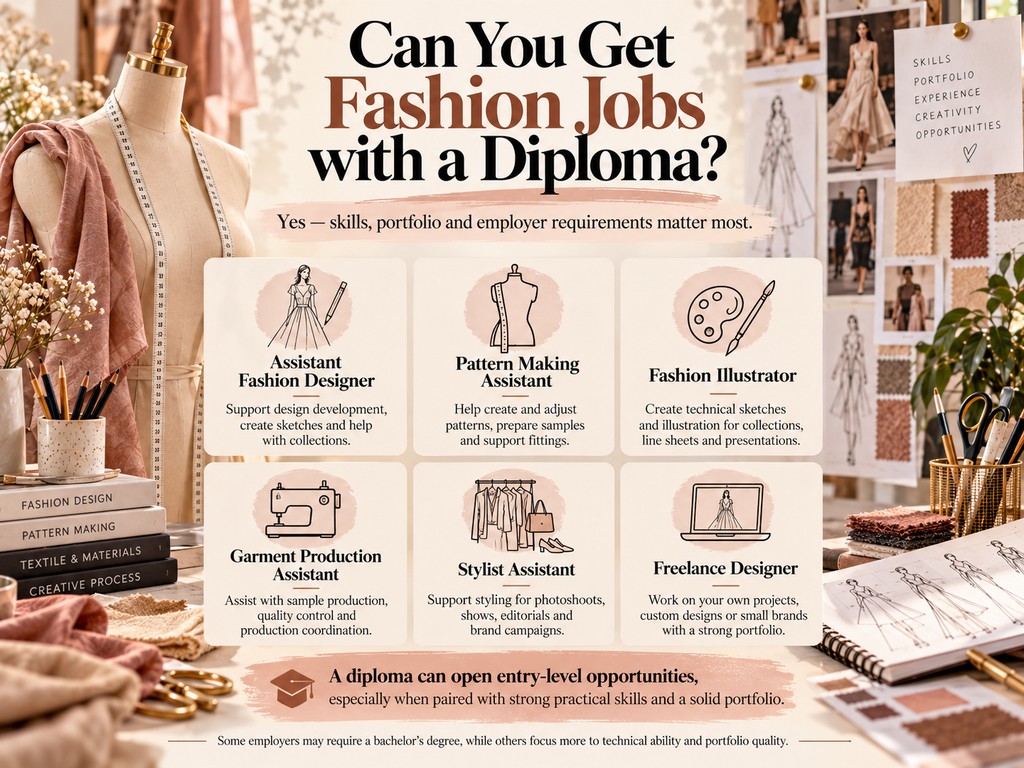
Does a Degree Provide More Career Options?
A degree can provide broader academic eligibility because it is an undergraduate qualification.
This can become important if you later want to pursue a master’s programme, academic career or a position that specifically requires graduation.
Diploma holders may also be eligible for further education in certain cases, but the exact rules depend on the programme and institution.
Can You Complete a Degree After a Diploma?
Sometimes.
For example, NIFT offers lateral entry into the second year of certain B.Des programmes for eligible diploma holders who meet its requirements.
However, not every diploma automatically qualifies for lateral entry.
Before enrolling in a diploma with plans to complete a degree later, check:
- Who awards the diploma?
- Is it recognised for your intended progression route?
- Which universities accept it?
- Will you receive lateral entry or start from Year 1?
- Are additional entrance exams or experience required?
Confirm these details with the institution offering the future degree.
Is a Diploma Cheaper Than a Degree?
A shorter diploma is often less expensive overall, but fees vary significantly between institutions.
Consider the complete cost, including:
- Tuition and admission fees
- Fabric and sewing materials
- Pattern-making supplies
- Software
- Laptop requirements
- Portfolio production
- Printing
- Transport
- Accommodation
A programme with lower tuition can still become expensive if many practical costs are charged separately.
Which Is Better After Class 12?
A degree may suit you if:
- You want a full undergraduate qualification.
- You want several years to develop your skills.
- You want exposure to multiple areas of fashion.
- You may pursue postgraduate education.
- You want structured internships and major projects.
- You are not yet sure which area of fashion you want to specialise in.
A diploma may suit you if:
- You want specific fashion skills in a shorter period.
- You already have another degree and want to enter fashion.
- You want practical training without committing to a multi-year programme.
- You are interested in freelancing or entrepreneurship.
- Time or financial constraints make a degree difficult.
- You already know which practical skills you want to develop.
The better option is the programme that matches your circumstances and provides credible training.
What If You Want to Start Your Own Fashion Label?
You do not necessarily need a diploma or degree to launch a clothing brand, but structured training can reduce the amount you have to learn through trial and error.
Look for programmes that teach more than fashion sketching, including:
- Fabric sourcing
- Pattern development
- Garment construction
- Costing
- Production
- Quality control
- Merchandising
- Branding
- Customer research
- Digital marketing
- Collection development
A degree may explore these areas over several years, while a focused diploma combined with real industry experience can also be valuable.
What Matters More: Degree, Diploma or Portfolio?
There is no single answer.
Formal qualifications matter when employers or universities specify eligibility requirements.
A portfolio matters because fashion is a visual and practical field.
Technical skills matter because creative ideas need to be turned into workable products.
Industry experience matters because professional fashion involves deadlines, production limitations, teamwork and commercial requirements.
A useful way to think about your preparation is:
Qualification + Practical Skills + Portfolio + Experience
The certificate is only one part of building a fashion career.
8 Questions to Ask Before Choosing a Course
Before paying an admission fee, ask:
- Who awards the qualification?
- Is the awarding institution appropriately recognised?
- What will I study each semester?
- How many hours of practical studio training are included?
- Will I learn pattern making and garment construction?
- Are internships genuinely included?
- What kind of portfolio will I graduate with?
- Will this qualification allow me to pursue higher education later?
For degree programmes in India, verify the degree-awarding institution and relevant recognition rather than relying only on the institute’s marketing claims.
Diploma or Degree: How to Decide
| If this sounds like you… | Consider exploring… |
| I want a full undergraduate qualification after Class 12. | Degree |
| I want broader exposure before specialising. | Degree |
| I may pursue a master’s later. | Degree, while checking eligibility |
| I want a shorter practical programme. | Diploma |
| I already have a degree and want fashion skills. | Diploma |
| I want to begin practical training quickly. | Diploma |
| I want technical skills for my own boutique. | Diploma or degree |
| I want extensive campus, internship and project exposure. | Compare degree programmes |
| I am unsure which area of fashion interests me. | A broader degree may help |
| I already know the exact skills I want. | A focused diploma may be enough |
Do not choose only because one qualification sounds more prestigious.
Compare the curriculum, faculty, facilities, student work, recognition, internships and future progression opportunities.
Frequently Asked Questions
Is a diploma in fashion designing worth it?
It can be, provided the programme offers relevant practical training, credible faculty and suitable facilities and matches your career goals.
Is a degree compulsory to become a fashion designer?
No single educational route applies to every fashion designer. However, some employers, roles and postgraduate programmes may require a recognised bachelor’s degree.
How long is a fashion design degree?
Duration depends on the qualification and university. NIFT’s B.Des Fashion Design programme, for example, is four years.
How long is a diploma in fashion designing?
There is no standard duration. Some programmes last around one year, while others may take longer.
Can I do a diploma after Class 12?
Many programmes accept students after Class 12, but eligibility varies by institution.
Can I do a degree after a fashion diploma?
Possibly. Some institutions provide lateral entry or progression routes for eligible diploma holders, but requirements should be checked before enrolling.
Is a fashion design degree better for jobs?
A degree may satisfy formal qualification requirements for more positions, but employability also depends on your portfolio, technical skills, experience and employer requirements.
What is more important: qualification or skills?
Both matter in different situations. Qualifications affect formal eligibility, while skills and portfolio quality demonstrate what you can actually do.
Conclusion
Choosing between a diploma and a degree in fashion designing ultimately comes down to depth, time and purpose.
A diploma offers a shorter, more focused route to practical fashion skills and may suit career changers, aspiring entrepreneurs or students who want targeted training.
A degree provides more time to explore fashion in depth, develop a broader academic and creative foundation, complete larger projects and maintain a clearer route into postgraduate education.
Neither option succeeds simply because of the certificate.
Before enrolling, examine what you will learn, who awards the qualification, how much practical training is included, what portfolio you will build and what opportunities remain available after completing the course.
The strongest programme is the one that gives you the skills, experience and qualification needed for the direction you want to pursue.