


Have you ever bought two shirts labeled “Medium” – one from your favorite brand, one from somewhere new – and found that one fit perfectly while the other pulled across the shoulders or sagged at the waist?
You’re not imagining it, and it isn’t your body.
Fit and size are two different things, and most of the confusion shoppers feel comes from treating them as if they were the same. Size is just a label. Fit is the actual outcome – how a garment moves with your body, where it sits, and whether it does what it was designed to do. Two garments can carry an identical size tag and still be built on completely different blueprints.
This guide breaks down what fit actually is, why it varies so wildly between brands, what happens behind the scenes before a garment ever reaches a store shelf, and how you can shop – and dress – with far fewer surprises.
Fit vs. Size: Why They’re Not the Same Thing
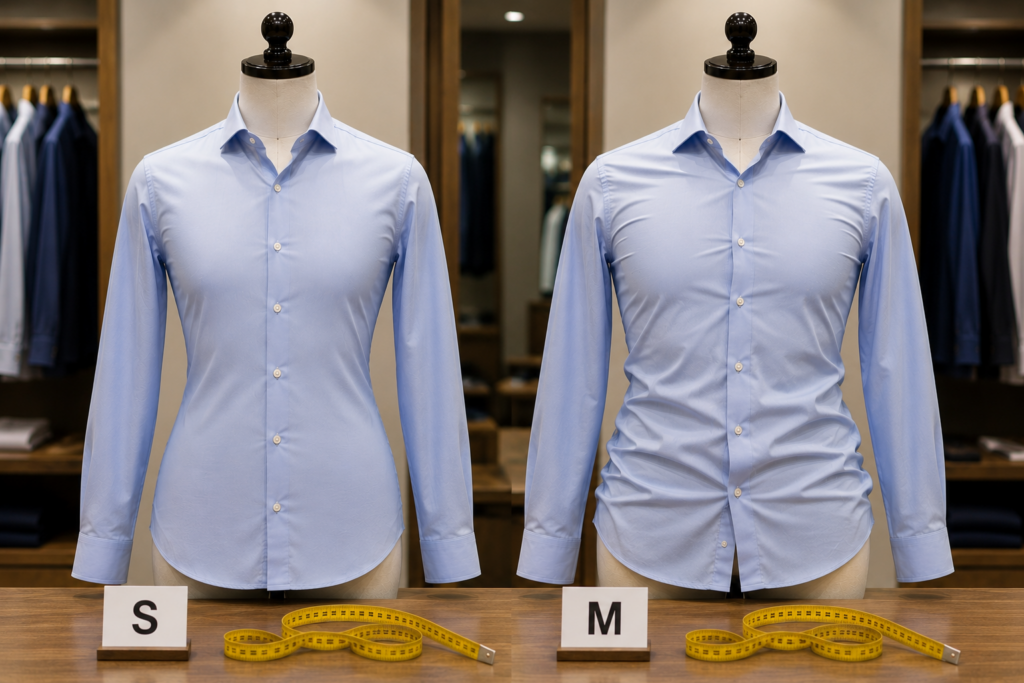
Size is a label – XS, M, L, or a number like 30, 32, 34 – meant to correspond loosely to a set of body measurements.
Fit is what actually happens when the garment is on a body: where it sits, how it moves, and whether the silhouette holds up while you walk, sit, or reach for something on a shelf.
Two shirts can both be labeled Medium and still be engineered for entirely different outcomes – one slim through the body, one cut with extra room through the chest and arms. The label tells you almost nothing about which one you’re holding until you try it on or check the actual garment measurements.
This is also why “true to size” is such a slippery phrase in online reviews. It usually means the size matched the body measurement the reviewer expected – not that the fit matched what they wanted.
Why the Same Size Fits Differently Across Brands
There’s no single global sizing standard that every clothing brand follows. Each company builds its own system, and that system is shaped by a few key forces.
1. Brand-Specific Fit Blocks
Every apparel company starts from a fit block – a master pattern template that every garment in a line is built from. Fit blocks differ by brand identity:
- Athletic brands often build in extra room through the shoulders and chest for mobility.
- Fashion-forward labels tend to favor slimmer, closer-to-body silhouettes.
- Luxury houses frequently use more tailored, structured proportions.
- Casual and basics brands typically prioritize ease and comfort over a fitted shape.
Because each brand starts from a different block, there’s no realistic way for a size Medium to mean the same thing twice.
2. Different Target Customers
A brand’s fit block is usually built around a specific customer profile – athletic, petite, tall, curvier, or otherwise. Even two people with the exact same chest measurement can have very different shoulder widths, torso lengths, or hip proportions, so a block built for one body type will inevitably fit another person differently, even at the “correct” size.
3. Vanity Sizing
Many brands have quietly increased the actual dimensions of a given size label over time while keeping the number the same – a practice known as vanity sizing. It’s a marketing decision more than a fit decision, and it’s a major reason a size 10 from one retailer can run noticeably larger or smaller than a size 10 from another.
The Foundation of Fit: Pattern Making and Ease
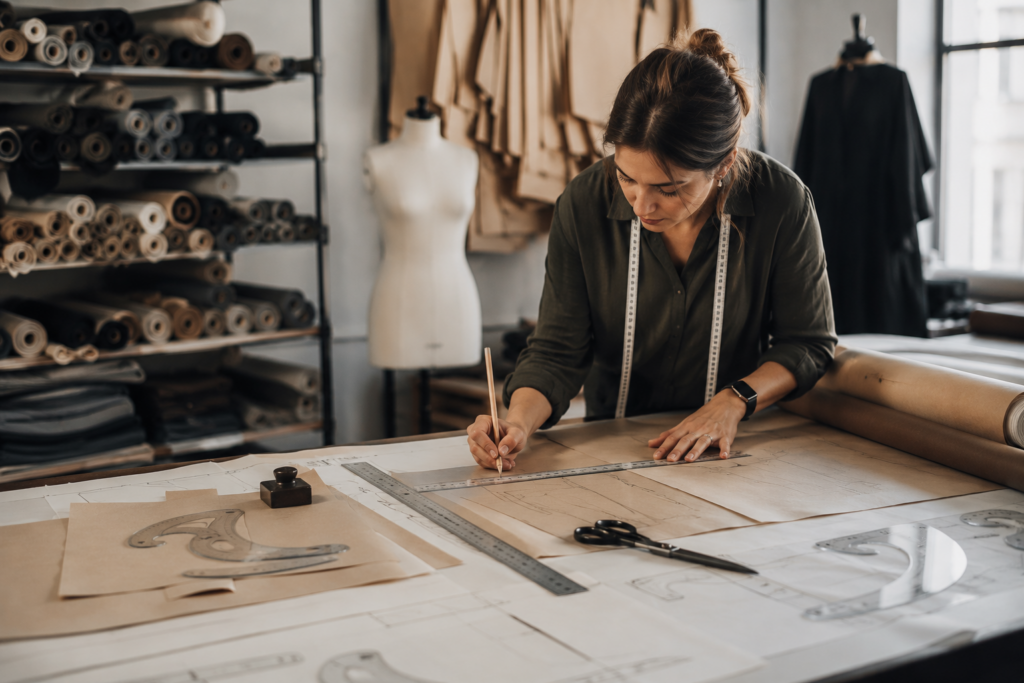
Every garment starts life as a pattern – the blueprint used to cut fabric before anything is sewn. Pattern makers decide proportions, shaping, balance, and silhouette, and small changes here ripple through the entire garment: widening the shoulder line changes posture and drape, deepening the armhole changes how freely the arm moves, reshaping the waist changes the whole silhouette.
One of the most important – and most overlooked – concepts pattern makers work with is ease: the extra room built into a garment beyond your actual body measurements.
Wearing ease is the room needed for basic movement. Without it, walking, sitting, and reaching become genuinely restrictive — buttons strain, seams pull, fabric won’t move with you.
Design ease is added on purpose to create a specific look – the extra volume in an oversized hoodie, a wide-leg trouser, or a boxy jacket. It’s an aesthetic choice rather than a comfort requirement.
A slim-fit shirt uses very little ease of either kind. A relaxed or oversized piece leans heavily on design ease. Neither is “wrong” – they’re just solving for different goals.
The Five Pillars Professional Fit Technicians Check
Tailors and fit technicians evaluate a finished garment against five core criteria. This is essentially the checklist used in a professional fit session, and it’s a genuinely useful way to diagnose why something feels off.
| Pillar | What It Means | What Goes Wrong When It Fails |
| Ease | Room for movement without looking oversized | Garment feels restrictive, or swims on the body |
| Line | Structural seams align with the body’s natural shape | Side seams twist, shoulders sit unevenly |
| Grain | Fabric is cut along its correct woven direction | Hems go uneven, fabric drapes oddly, seams pull diagonally |
| Set | The garment sits smoothly with no tension | Pulling across the chest, bunching at the neck, wrinkling at the hips |
| Balance | The garment hangs evenly front to back | A shirt rides backward, a skirt hikes up in the rear |
A garment can fail on just one of these and feel completely wrong, even if every measurement on the tag is technically correct.
How Fabric Changes the Outcome
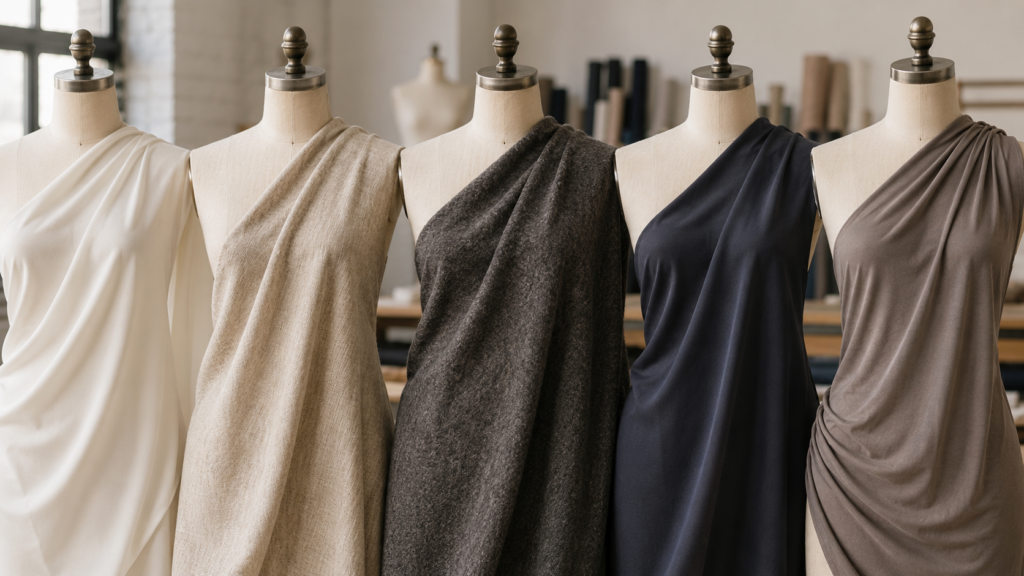
The exact same pattern, cut in two different fabrics, can produce two genuinely different fits. A few of the properties that matter most:
- Stretch – fabrics with elastane or spandex flex with the body and forgive a wider range of shapes, though too much reliance on stretch can mask a poorly drafted pattern underneath.
- Drape – how fabric falls. Soft, fluid fabrics like rayon or silk create movement; stiffer fabrics like denim or canvas hold structure and shape.
- Recovery – how well a fabric snaps back to its original shape after being stretched. Poor recovery is why some garments sag or bag out at the knees and elbows over time.
- Weight – heavier fabrics hang differently than lightweight ones, changing both comfort and silhouette even on an identical pattern.
Common fiber types behave predictably differently too: cotton is breathable and versatile but can shrink without pre-treatment; linen breathes well and softens with wear but wrinkles easily; wool naturally molds to the body and drapes well; polyester holds its structure and resists shrinking but breathes less than natural fibers. This is exactly why experienced designers fit-test in the actual production fabric, not just a sample swatch – a pattern that works in cotton twill can behave completely differently in a stretch jersey.
Body Proportions and the Fit Model
Pattern makers can’t design for every body, so brands build around a fit model – a person whose measurements represent the brand’s target customer. Every garment is tested and adjusted on this person (or a small panel of people) before it’s approved for production.
This matters because two people with the same chest measurement can have very different shoulder widths, arm lengths, torso lengths, posture, and hip proportions. A pattern that fits one fit model beautifully may not translate cleanly to a body with different proportions – which is part of why a brand’s fit can feel “made for me” or “never quite right,” independent of the size you’re buying.
How Fashion Brands Actually Test Fit

Fit isn’t approved on the first try. A typical development process looks like this:
- Prototype creation – a first sample is sewn from the pattern.
- Fit session – the sample is evaluated live on the fit model, checking against the five pillars above.
- Corrections – the pattern is adjusted based on what the fit session reveals.
- Additional samples – a revised version is cut and tested again.
- Final approval – once the garment performs consistently, it’s cleared for mass production.
A single style can go through several rounds of this loop before it ever reaches a sales floor. It’s also one reason premium brands tend to deliver more consistent fit – not necessarily a “better” fit for any one body, but a more reliably repeated one across a collection.
A fit technician’s perspective: Practitioners in ready-to-wear production often describe fit problems the same way – almost nothing gets fixed by changing the size grade alone. A shoulder seam that sits wrong, or a sleeve that twists, usually traces back to the original pattern draft, not the size chart. Grading a flawed pattern up or down just repeats the same problem at every size.
Comparing Fit Types
Brands describe fit using a handful of standard categories. Knowing these terms – and checking which one a specific product page uses – is one of the fastest ways to predict whether something will work for you before it arrives.
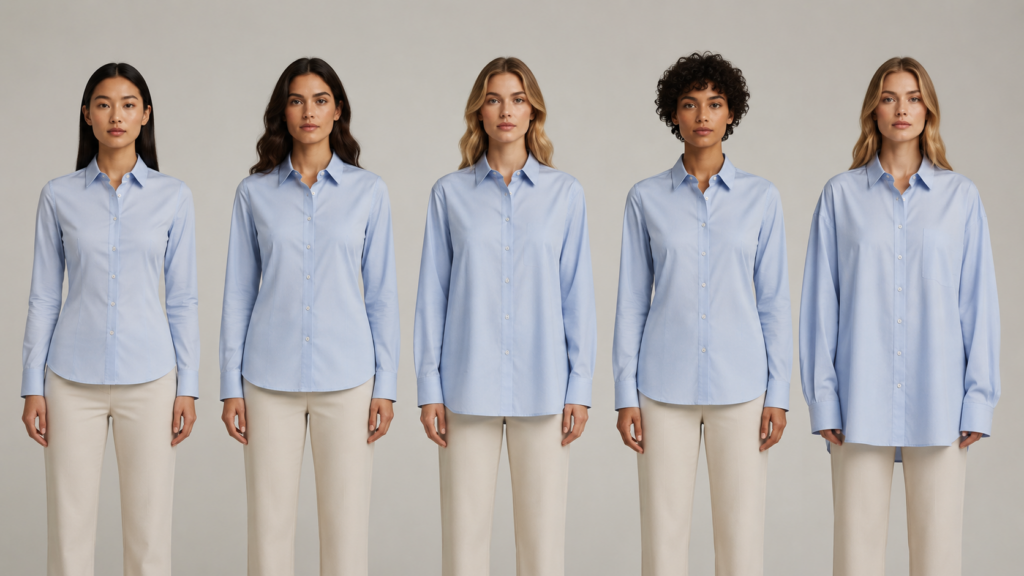
| Fit Type | Silhouette | Ease Level | Best For |
| Slim Fit | Close to the body | Minimal | Lean or athletic builds, modern tailoring |
| Regular Fit | Balanced, classic | Moderate | Most body types, everyday versatility |
| Relaxed Fit | Roomier throughout | Generous | Comfort-first, casual wear |
| Tailored Fit | Structured, refined | Low–moderate, shaped | Business and formal occasions |
| Oversized Fit | Intentionally loose | Heavy design ease | Fashion-forward styling over traditional fit |
Common Fit Problems and What They Actually Mean
| What You Notice | What’s Usually Causing It |
| Tightness across the chest | Not enough ease, wrong size, or a pattern shape that doesn’t match your build |
| Shoulder seams sitting too far out | Garment runs oversized, or the shoulder width on the pattern is simply too wide |
| Buttons pulling or gapping | Garment too small, or a chest/bust mismatch with the pattern’s intended shape |
| Excess fabric pooling at the waist | Incorrect cut for your body shape, or a waist shaping that doesn’t match your proportions |
| Wrinkling or pulling around the hips | Poor grading between sizes, or simply not enough room built into that area |
This table alone can save a lot of guesswork the next time something doesn’t sit right – the fix is rarely “go up a size” by default; it depends on which symptom you’re actually seeing.
Why Fit Is a Bigger Deal Than It Seems
Poor fit isn’t just a personal annoyance – it’s a measurable cost across the industry. Multiple industry studies report that a large majority of online apparel returns trace back to sizing and fit problems; McKinsey research, for instance, has put the figure at around 70% of fashion returns being fit-related, and other industry surveys have found similar figures in the 50–90% range depending on category and region. Whatever the exact number in a given study, the pattern is consistent: fit, not damage or color mismatch, is the leading driver of returns in apparel e-commerce. That has real downstream costs in shipping, restocking, and packaging waste.
For the person actually wearing the clothes, the cost is just as real: poor fit can undercut confidence, create physical discomfort, restrict movement, wear out a garment faster than it should, and turn shopping into a guessing game. People aren’t just buying fabric – they’re buying predictability.
How to Find Your Fit More Reliably
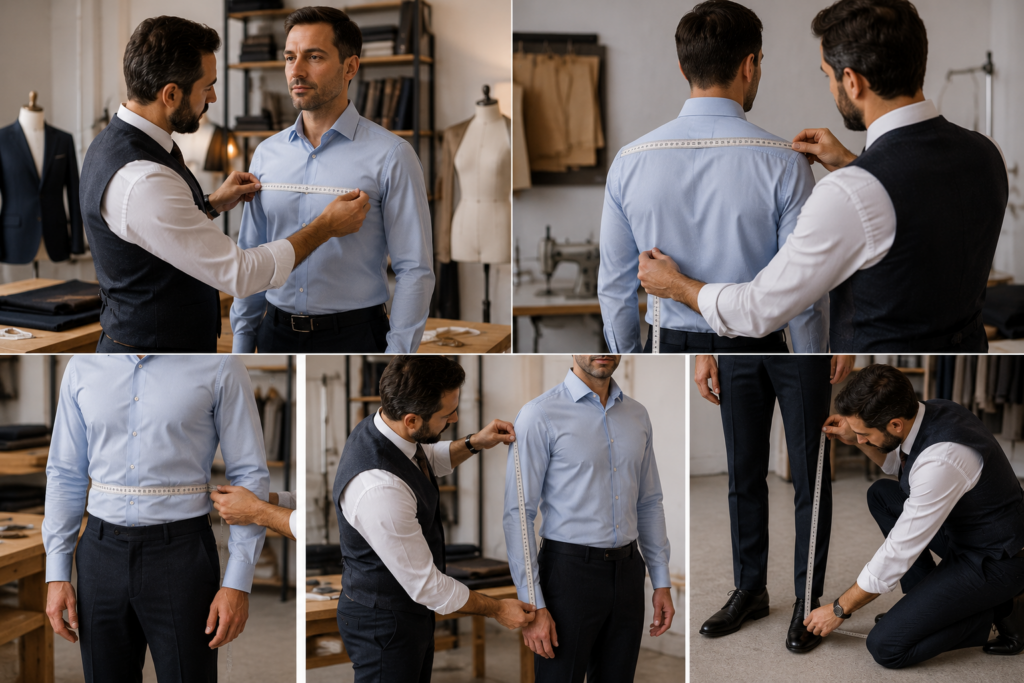
A few habits cut down on guesswork far more effectively than just trusting a size label:
- Keep your own measurements current – chest, waist, hips, inseam, and shoulder width – and check them directly against a brand’s actual size chart rather than assuming your usual letter size will translate.
- Prioritize shoulder fit first, especially for jackets, blazers, and structured shirts. Shoulders are difficult and expensive to alter; almost everything else (hem, waist, sleeve length) is comparatively easy.
- Test movement before buying, not just stillness – sit, raise your arms, bend, walk a few steps if you can. A garment that looks fine standing still in a mirror can still fail in motion.
- Budget for basic tailoring. A moderately priced garment with a good alteration often reads as more polished than an expensive one that’s never been touched up.
Where Garment Fit Is Headed
A handful of technologies are starting to chip away at the guesswork that’s defined online apparel shopping for two decades:
- AI-driven size recommendation engines that learn from past purchase and return data
- 3D body scanning, increasingly available through phone cameras
- Virtual fitting rooms and digital try-on tools
- Made-to-measure and on-demand production models that build garments to an individual’s actual measurements rather than a standard grade
None of these eliminate the underlying complexity of fit – bodies are still diverse, and fabric still behaves the way fabric behaves – but they’re meaningfully reducing the gap between what a shopper expects and what arrives in the box.
Frequently Asked Questions
Does “true to size” mean a garment will fit me well? Not necessarily. “True to size” usually just means the labeled size matches the brand’s own size chart for that measurement – it says nothing about ease, fit type, or whether that brand’s fit block suits your proportions.
Why does fit vary even within the same brand? Different garment categories within one brand are often built from different fit blocks, and ease varies by style. A brand’s jeans and its blazers are rarely cut from the same underlying logic, even if both carry a “Medium.”
Is a bigger size always a safer bet when I’m unsure? No – sizing up can fix tightness but often creates new problems with balance and shoulder placement, especially in structured garments like blazers or button-up shirts. Checking the actual garment measurements against your own is more reliable than guessing in either direction.
Can fabric alone fix a fit problem? Stretch fabric can mask minor fit issues, but it can’t correct a fundamentally mismatched pattern – a shoulder seam that’s drafted wrong will still sit wrong, stretch fabric or not.
Is it worth paying for alterations on inexpensive clothing? Often, yes. A basic alteration – hem, sleeve, or waist – is usually inexpensive relative to the garment and can meaningfully change how something looks and feels, sometimes more than upgrading to a pricier item with no alterations at all.
Final Thoughts
A garment that fits well is rarely an accident. It’s the product of a specific pattern, a specific fabric’s behavior, a fit model’s proportions, and – often – several rounds of testing before it ever reached a store shelf or a product photo.
The next time something doesn’t sit right, the size on the tag is rarely the full story. More often, the real explanation is in the pattern, the fabric, or the fit block the garment was built around in the first place – and once you know what to check, finding clothes that actually work for your body gets a lot less like guesswork.