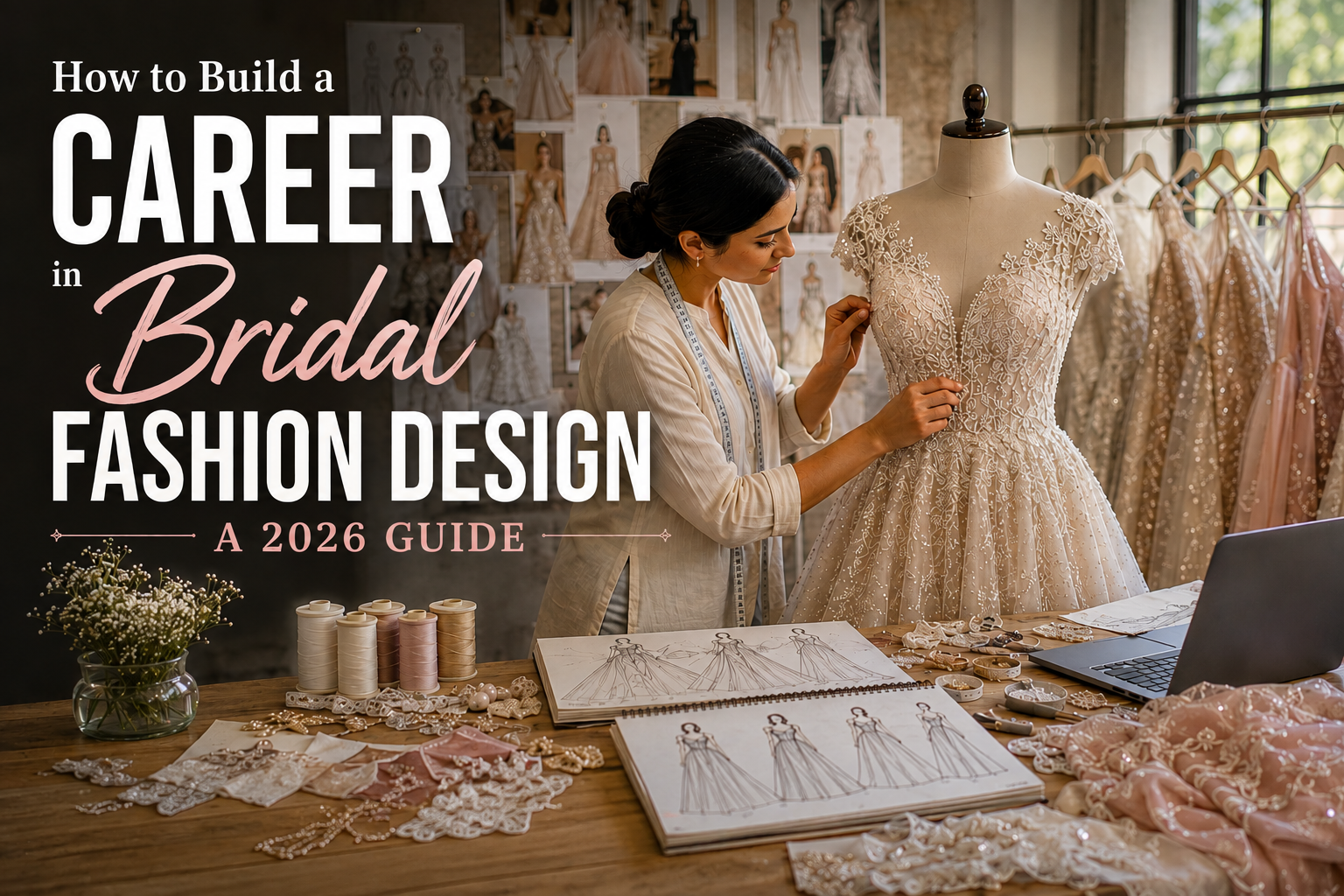
What Does a Bridal Fashion Designer Actually Do?
Bridal fashion designers do far more than sketch beautiful gowns. Because bridal garments are personal and often bespoke, designers are involved in nearly every stage of creation – meeting clients to understand their vision and budget, researching inspiration, sketching concepts, selecting fabrics and embellishments, pattern-making and draping, coordinating with tailors and artisans, supervising sample development, running fittings, and managing delivery timelines.
Precision matters enormously since garments are handcrafted and often one-of-a-kind. Just as important as technical skill is client psychology: wedding planning is stressful, and designers must communicate clearly and manage expectations across brides, families, and planners.
How Bridal Fashion Differs from Ready-to-Wear
| Ready-to-Wear | Bridal Fashion |
| Seasonal collections | Milestone life events |
| Standard sizes | Made-to-measure or bespoke |
| Fast production | Multiple fittings over months |
| Commercial trends | Personalization and craftsmanship |
| Large quantities | Small-batch or one-of-a-kind |
| Moderate complexity | Advanced couture construction |
Bridal garments also demand structural engineering – corsets, boning, layered skirts, trains, and delicate fabrics requiring specialized handling.
Why Choose Bridal Fashion as a Career?
- Every project is unique – no two brides want the same silhouette, cultural style, or body-appropriate design.
- High creative satisfaction – bridal garments often become family heirlooms, giving the work lasting meaning.
- Multiple career paths – designer, couture assistant, pattern maker, stylist, embroidery designer, product developer, consultant, entrepreneur, or educator.
- Growing demand for personalization – bespoke couture, sustainable fashion, inclusive sizing, convertible outfits, and made-to-measure online services are all expanding.
- Strong entrepreneurial potential – many designers start small, made-to-order businesses built on referrals and social media before scaling up.
The Industry Today
Bridal fashion now extends well beyond the wedding dress itself, covering engagement parties, showers, receptions, and destination events. Technology – digital sketching, 3D visualization, and virtual consultations – has streamlined collaboration, while sustainability (ethical sourcing, upcycled textiles, re-wearable garments) is reshaping client expectations. Traditional craftsmanship, however, remains what separates premium bridal fashion from mass-produced occasion wear.
Essential Skills
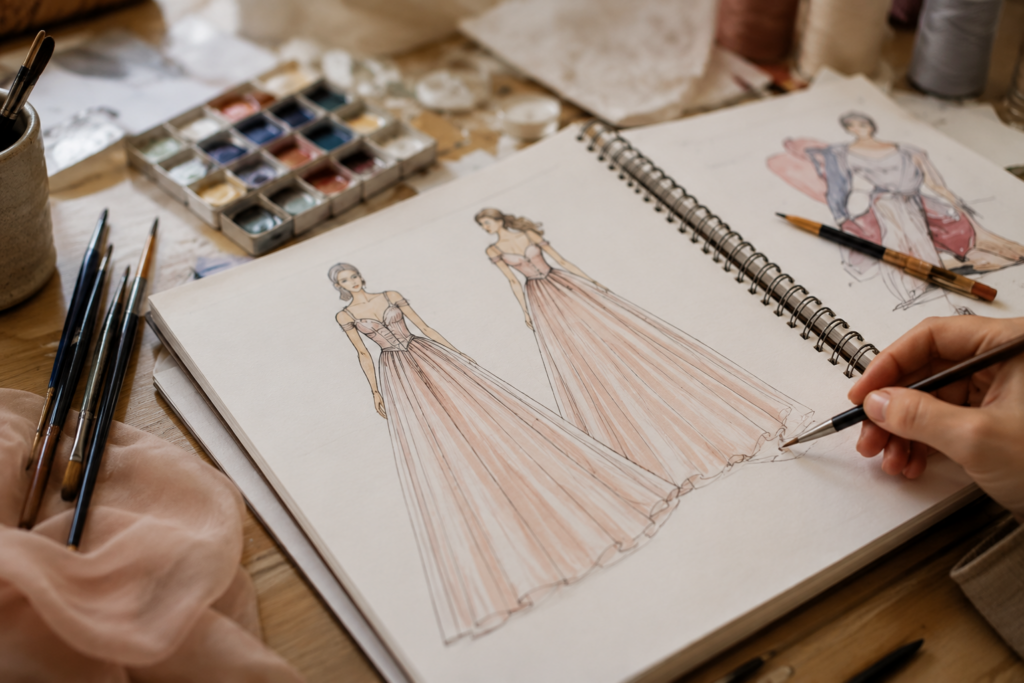
1. Creative Skills
- Fashion illustration: hand sketching, digital illustration, technical flats, color rendering – essential for communicating ideas quickly.
- Trend research: monitor bridal fashion weeks, couture collections, and cultural traditions, but adapt trends rather than copy them.
- Color theory: understanding warm/cool tones, contrast, and palettes beyond traditional white.
2. Technical Skills
- Pattern making: drafting for princess seams, structured bodices, trains, and dramatic necklines.
- Draping: building silhouettes directly on a dress form, especially useful for tulle, organza, silk, and chiffon.
- Corsetry and internal construction: boning, waist stays, bust cups, and petticoats that let a gown hold its shape without restricting the bride.
- Couture sewing: hand stitching, invisible hems, French seams, lace appliqué, and hand beading.
- Textile knowledge: understanding how fabrics like silk mikado, satin, organza, tulle, chiffon, crepe, lace, and brocade behave in cutting, stitching, and embroidery.
- Surface ornamentation: hand embroidery, pearl and crystal work, zardozi, aari, and thread work – knowing when embellishment adds elegance and when restraint does.
3. Digital Skills
- Adobe Illustrator for technical flats and illustrations.
- Adobe Photoshop for mood boards and presentations.
- CLO 3D for virtual garment visualization, fabric simulation, and faster client approvals without costly physical samples.
- AI tools for mood boards, concept exploration, and trend research – supporting creativity, not replacing craftsmanship.
4. Soft Skills Active listening, time management, problem-solving, emotional intelligence, negotiation, and adaptability often matter as much as technical ability. Clients remember how a designer made them feel as much as the finished garment.
Educational Pathways
| Path | Best For | Advantage |
| Bachelor’s Degree | Students post-school | Strong foundational grounding |
| Diploma Programs | Faster entry | Practical, skill-focused |
| Specialized Bridal Courses | Bridal-specific expertise | Couture and bridal construction focus |
| Apprenticeships | Hands-on learners | Real production experience |
| Self-Learning + Mentorship | Independent learners | Flexible, affordable |
Whichever path you choose, prioritize practical experience – fashion is a portfolio-driven industry.
Career Roadmap
- Learn fundamentals – illustration, sewing, pattern making, textiles.
- Specialize in bridal – silhouettes, corsetry, embroidery, draping, fittings.
- Create full bridal projects – gowns, lehengas, reception wear, cultural collections (quality over quantity).
- Gain industry experience – internships at boutiques, couture houses, or embroidery studios.
- Build a portfolio – include mood boards, sketches, fabric swatches, pattern drafts, and final photography, showing your process, not just finished garments.
- Secure an entry role – design assistant, sample coordinator, pattern assistant, or bridal stylist.
- Develop a signature style – become known for a distinctive aesthetic, whether minimalist, traditional, or sustainable.
Start documenting your work from day one – even beginner projects show growth and problem-solving, which employers value as much as polished final images.
Gaining Real-World Experience
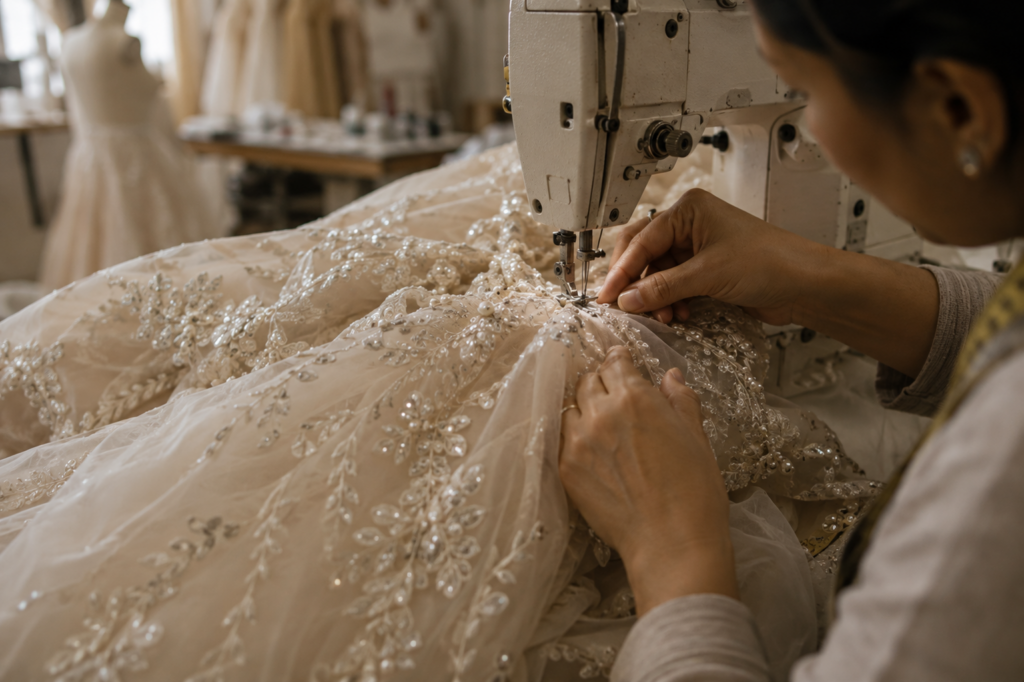
- Internships at bridal designers or couture houses expose you to client consultations, fabric sourcing, fittings, and production timelines.
- Local boutiques often offer broader hands-on exposure than larger houses since smaller teams require multitasking.
- Learning from artisans – embroiderers, tailors, and textile specialists – builds respect for craftsmanship and realistic timelines.
- Bridal fittings teach you to spot balance issues, tension, and comfort concerns on real bodies.
- Fashion shows and bridal expos build both practical skills and professional networks.
Building a Personal Brand
A portfolio website (bio, portfolio, philosophy, services, testimonials) and strategic social media use – sharing sketches, draping videos, and behind-the-scenes content – help establish credibility. Consistency in posting, style, and professionalism builds a reputation that generates referrals over time.
Career Opportunities
| Career | Focus |
| Assistant Bridal Designer | Sketches, sampling, production support |
| Bridal Fashion Designer | Custom collections and garment development |
| Pattern Maker | Accurate garment construction |
| Couture Assistant | Fittings and luxury finishing |
| Bridal Stylist | Complete wedding looks |
| Embroidery Designer | Embellishment layouts |
| Product Developer | Design-to-manufacturing coordination |
| Fashion Consultant | Advising brands or private clients |
| Fashion Educator | Teaching design or couture |
| Entrepreneur | Running an independent label |
Salary and Freelancing
Earnings depend on location, experience, skill level, employer, and client base. Independent designers often diversify income through custom commissions, ready-to-order pieces, styling, workshops, and consulting. Freelancing works best once you have a polished portfolio, reliable production partners, clear pricing, and contracts – many designers start with smaller projects alongside full-time work before going independent.
Launching Your Own Bridal Label
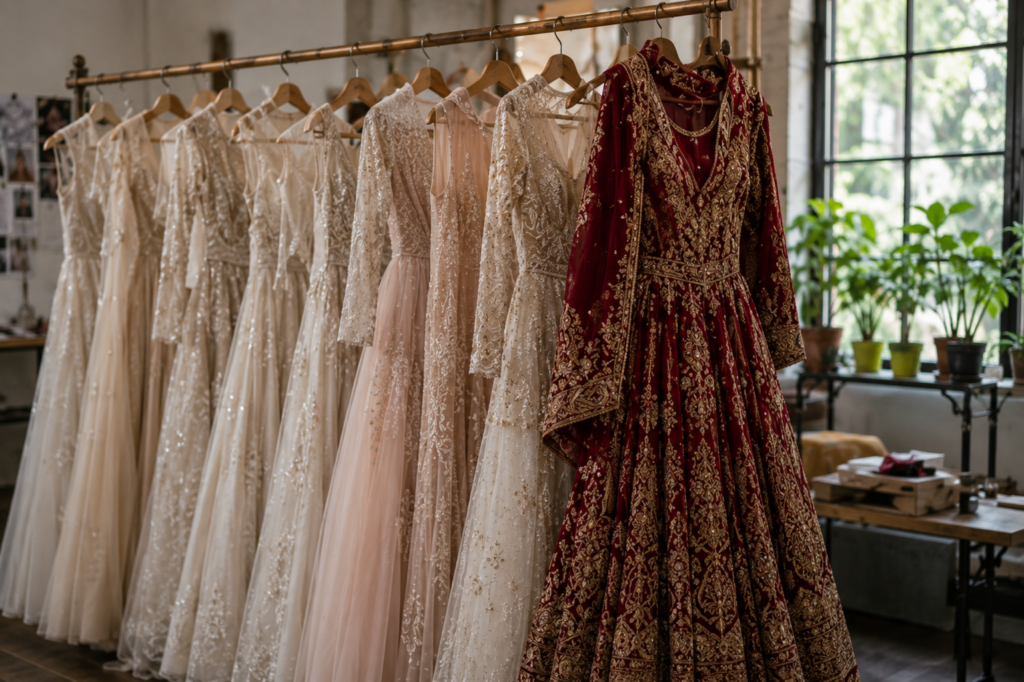
- Define your niche – e.g., minimalist bridal wear, heritage couture, sustainable fashion, or plus-size bridal design.
- Build reliable supplier relationships with fabric, lace, embroidery, and tailoring partners.
- Price properly – factor in design time, sampling, alterations, overheads, and profit margin, not just fabric cost.
- Deliver an exceptional client experience through clear communication and organized fittings.
- Market your brand through photography, social media, expos, and designer collaborations that tell your craftsmanship story.
Watch: the real cost breakdown of a couture bridal lehenga, and how luxury pricing works.
Future Trends
- Sustainability: responsibly sourced fabrics, upcycled textiles, made-to-order production, and rental-friendly designs.
- Digital design: 3D prototypes and virtual consultations reducing sampling costs and waste.
- Personalization: monogramming, heirloom details, and cultural fusion over chasing trends.
- Inclusivity: extended sizing, adaptive clothing, and modest or gender-inclusive bridal wear.
- Luxury experience: private consultations, digital updates, and premium packaging becoming as memorable as the garment itself.
Common Mistakes to Avoid
- Focusing only on sketching without mastering construction.
- Ignoring pattern making and relying entirely on tailors.
- Building a portfolio of illustrations with few completed garments.
- Copying celebrity designs instead of developing an original voice.
- Underpricing work by ignoring design time and overheads.
- Neglecting clear, professional client communication.
- Chasing every trend instead of building a consistent design identity.
Quick FAQs
- Is this a good career? Yes – it offers paths through couture houses, boutiques, freelancing, and entrepreneurship.
- Do I need a degree? Not necessarily; a strong portfolio often matters more than formal credentials.
- Do I need to know how to sew? Basic sewing knowledge is highly recommended even if you later work with production teams.
- How long does it take? Most designers spend several years building skills and a portfolio before working independently.
- What software should I learn? Adobe Illustrator, Photoshop, and CLO 3D are the industry standards.
Final Thoughts
Bridal fashion design blends creativity, craftsmanship, business knowledge, and human connection. Success rarely happens overnight – it’s built through years of refining technical skills, learning from mentors, and consistently delivering quality work. Whether your goal is a couture house career, freelance practice, or your own label, focus on mastering the fundamentals, document your growth, and let every design reflect both your creativity and your dedication to craftsmanship.