When audiences think about unforgettable screen characters, they often remember more than the dialogue. A detective’s worn leather jacket, a queen’s embroidered gown, or a gangster’s crisp linen shirt instantly communicates personality, status, and emotion. Long before an actor delivers their first line, their costume has already begun telling the story.
That’s the power of costume design.
As the global demand for original films and streaming content continues to rise, costume designers are becoming increasingly important creative professionals. From historical epics and crime thrillers to contemporary dramas and fantasy series, every production relies on wardrobe choices that make characters believable and visually compelling.
The expansion of OTT platforms such as Netflix, Amazon Prime Video, JioHotstar, Sony LIV, ZEE5, and regional streaming services has opened new opportunities for aspiring costume designers. Unlike traditional films, many OTT productions span multiple episodes or seasons, requiring designers to maintain costume continuity while supporting long-term character development.
If you’re passionate about fashion but enjoy storytelling more than following seasonal trends, costume design could be an exciting career path. This guide explains what costume designers do, the skills you’ll need, educational pathways, and a practical roadmap to entering the film and OTT industry.
What Does a Costume Designer Do?
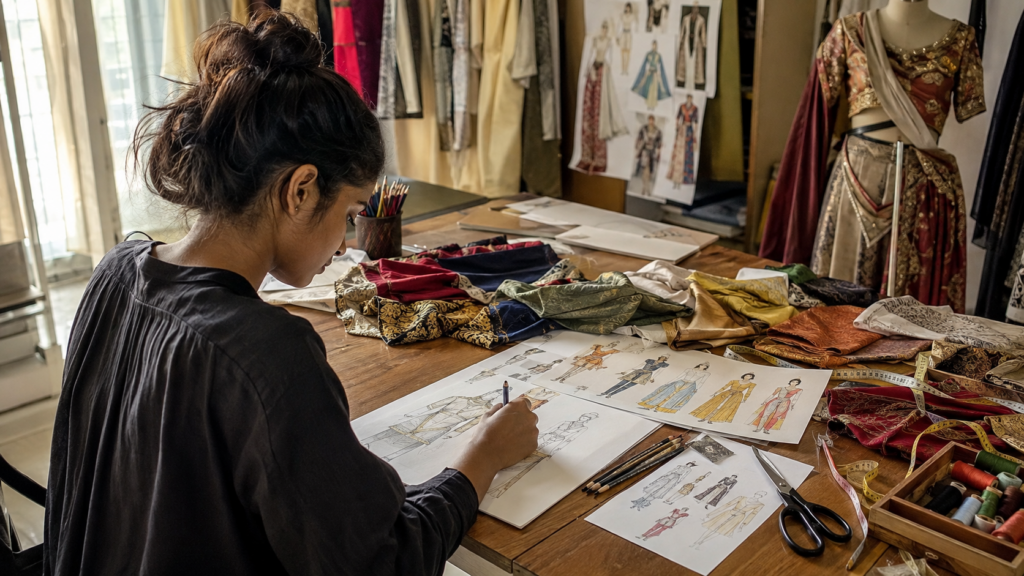
A costume designer is responsible for creating, selecting, sourcing, and managing the clothing worn by actors in films, television shows, web series, advertisements, and theatre productions. Their goal isn’t simply to make actors look stylish – it’s to ensure every costume supports the story, reflects the character’s personality, and fits the visual world envisioned by the director.
The process begins with carefully reading the script. Costume designers analyze each character’s background, profession, age, lifestyle, emotional journey, and the time period in which the story is set. Based on this research, they develop costume concepts that align with both the narrative and the production’s visual style.
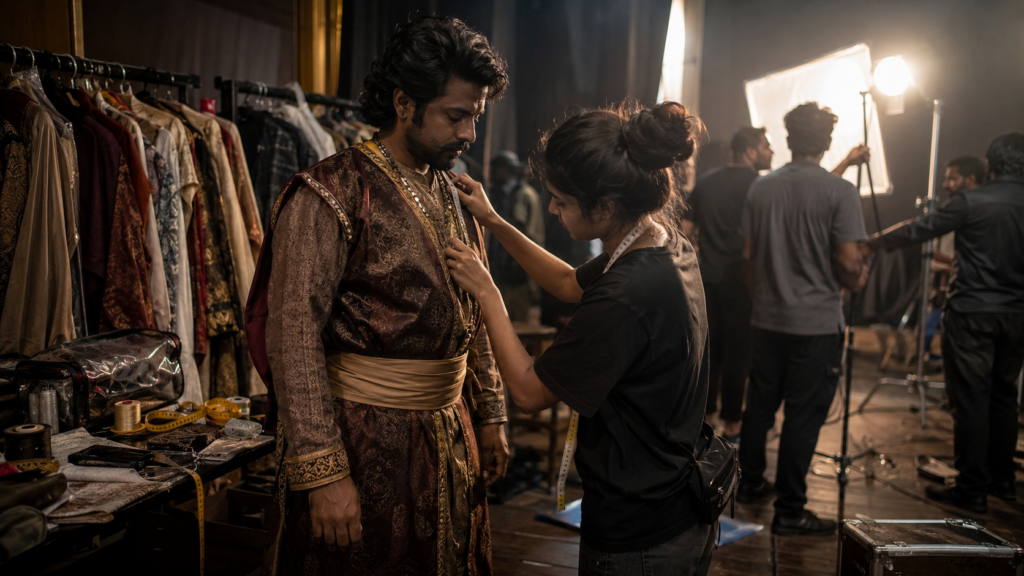
A typical project may involve:
- Breaking down the script scene by scene
- Researching historical periods, cultures, and fashion references
- Creating mood boards and costume sketches
- Selecting fabrics, colors, and accessories
- Coordinating costume fittings with actors
- Managing wardrobe budgets and sourcing garments
- Supervising tailors, wardrobe assistants, and costume teams
- Maintaining costume continuity throughout filming
On major productions, costume designers lead an entire wardrobe department. On smaller independent films or low-budget OTT projects, they may personally handle sourcing, alterations, fittings, and on-set wardrobe management.
Ultimately, costume designers blend creativity with organization. Their work shapes how audiences perceive characters without drawing attention away from the story itself.
Costume Designer vs. Fashion Designer: What’s the Difference?
Many aspiring creatives assume costume design is simply another branch of fashion design. While both involve clothing and aesthetics, their objectives are fundamentally different.
| Costume Designer | Fashion Designer |
| Designs for fictional characters | Designs for consumers |
| Supports storytelling | Follows market trends |
| Focuses on scripts and character psychology | Focuses on seasonal collections |
| Works with directors and production teams | Works with brands and manufacturers |
| Prioritizes authenticity and continuity | Prioritizes style, innovation, and sales |
For example, a fashion designer might create a contemporary jacket based on current trends. A costume designer, however, chooses or creates a jacket because it reveals something about a character – perhaps they’re a struggling journalist, a retired army officer, or a detective who has worn the same coat for years.
This narrative-first mindset distinguishes costume design from traditional fashion careers.
Essential Skills Every Costume Designer Needs
A successful costume designer combines artistic creativity with technical expertise and production management. While formal education can provide a foundation, the following skills are what employers and production houses value most.
1. Visual Storytelling
Every costume should answer questions that the audience may never consciously ask:
- Who is this character?
- What is their social background?
- How has their life changed throughout the story?
- What emotions should their appearance communicate?
The best costume designers think like storytellers, not stylists.
2. Script Analysis and Character Research
Costume design starts with understanding the script.
Before sketching a single outfit, designers often research:
- Historical clothing
- Regional traditions
- Occupations
- Religious influences
- Cultural dress codes
- Fashion references
- Character psychology
For period dramas or biographical films, accuracy becomes especially important. Even contemporary productions benefit from detailed research to ensure costumes feel authentic rather than generic.
3. Garment Construction and Textile Knowledge
Understanding how clothing is made helps designers communicate effectively with tailors, pattern makers, and costume assistants.
Useful technical knowledge includes:
- Fabric properties
- Pattern making
- Garment construction
- Dyeing techniques
- Alterations
- Textile selection
Even if you eventually supervise a team rather than sew garments yourself, knowing what’s possible within production deadlines makes you a stronger designer.
4. Costume Continuity
One of the biggest differences between fashion shoots and film production is continuity.
Movies and OTT series rarely film scenes in chronological order. A conversation shown in Episode 2 may actually be filmed weeks after Episode 8.
Costume designers carefully document every outfit, accessory, stain, wrinkle, and alteration so that viewers never notice these scheduling changes.
This is especially important for OTT productions, where stories unfold across multiple episodes or even several seasons.
5. Communication and Collaboration
Costume designers rarely work alone.
During a production, you’ll collaborate with:
- Directors
- Production designers
- Cinematographers
- Makeup artists
- Hair stylists
- Actors
- Tailors
- Wardrobe assistants
Excellent communication helps resolve creative disagreements, production delays, and last-minute script changes without disrupting filming.
6. Budget and Time Management
Creativity must often fit within financial constraints.
A designer might envision elaborate custom-made garments, but the production budget may require renting, modifying, or sourcing vintage pieces instead.
Successful costume designers know how to balance creative ambition with practical limitations while meeting tight deadlines.
7. Digital Design Skills
Modern costume departments increasingly use digital tools to speed up planning and collaboration.
Helpful software includes:
- Adobe Photoshop
- Adobe Illustrator
- Procreate
- CLO 3D
- Pinterest for visual research
- Canva for mood boards
While hand sketching remains valuable, familiarity with digital design tools gives you an advantage – particularly when collaborating on large productions with remote teams.
Educational Pathways to Become a Costume Designer
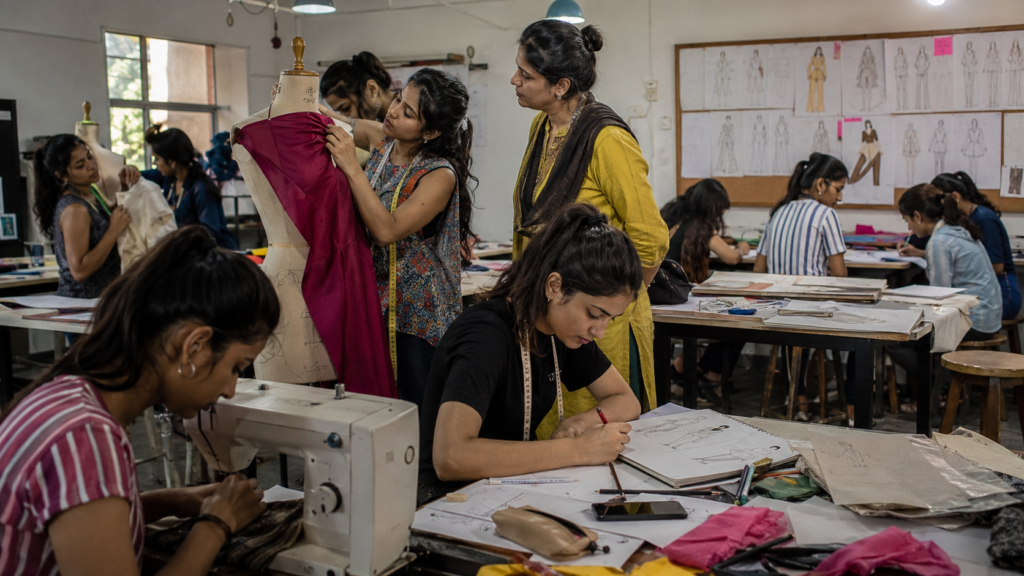
Unlike medicine or law, costume design doesn’t require a single mandatory qualification. Many successful professionals entered the industry through fashion design, theatre, fine arts, or practical apprenticeships.
However, structured education can accelerate your learning by helping you master garment construction, textiles, fashion history, and visual storytelling.
Popular study options include:
- Diploma in Fashion Design
- Bachelor’s Degree in Fashion Design
- Costume Design programs
- Textile Design
- Apparel Design
- Theatre Design
- Fine Arts with costume specialization
During these programs, students typically learn:
- Fashion illustration
- Pattern drafting
- Fabric science
- Costume history
- Textile selection
- Styling
- Garment construction
- Digital design software
That said, a degree alone won’t secure a career. Film and OTT productions value practical experience, adaptability, and a strong portfolio just as much as academic qualifications.
Many respected costume designers built successful careers by assisting experienced professionals before leading their own productions.
Step-by-Step Career Roadmap
There is no shortcut to becoming a lead costume designer on a major film or streaming series. Most professionals build their careers gradually by gaining practical experience on increasingly complex productions.
Step 1: Master the Fundamentals
Start by learning the basics of fashion design, textiles, garment construction, color theory, and costume history. Watch films critically – not just for entertainment, but to understand how costumes reflect each character’s personality and transformation.
Step 2: Practice Through Small Productions
Instead of waiting for a major opportunity, work on student films, theatre productions, fashion shoots, short films, or independent web series. These projects help you understand deadlines, fittings, continuity, and on-set collaboration while building your portfolio.
Step 3: Join a Costume Department
Most designers begin as wardrobe assistants or assistant costume designers. In these roles, you’ll learn how professional productions manage costume sourcing, fittings, continuity, budgeting, and communication across departments.
You’ll also develop industry relationships – an essential part of building a long-term career in film and OTT production.
Build a Portfolio That Gets You Hired
In the film industry, your portfolio carries more weight than your résumé. Directors and production houses don’t just want to see beautiful sketches—they want evidence that you understand storytelling through clothing.
Unlike a fashion portfolio, which focuses on design aesthetics, a costume design portfolio should demonstrate your ability to interpret scripts, develop characters, and solve production challenges.
Include These Elements
| Portfolio Element | Why It Matters |
| Character breakdowns | Shows your understanding of scripts and character psychology. |
| Mood boards | Demonstrates research and creative direction. |
| Costume sketches or digital renders | Communicates your design ideas clearly. |
| Fabric and color palettes | Highlights your knowledge of textiles and visual storytelling. |
| Photos of completed costumes | Proves you can turn concepts into reality. |
| Behind-the-scenes images | Shows your involvement in fittings and production. |
| Continuity sheets | Demonstrates attention to detail on long shoots. |
| Design notes | Explains why each costume supports the character and story. |
Think Like a Storyteller
Imagine you’re designing costumes for a detective in a crime thriller. Instead of simply sketching a trench coat, explain your choices:
- Neutral colors to reflect a grounded personality
- Slightly worn fabrics to suggest years of field experience
- Practical footwear for action sequences
- Minimal accessories to reinforce realism
This kind of design thinking helps directors understand your creative process and sets your portfolio apart from one that only showcases artistic talent.
Build a Strong Digital Presence
Today’s recruiters often discover designers online before scheduling an interview.
Consider creating:
- A professional portfolio website
- A Behance profile
- An Instagram page dedicated to costume work
- A LinkedIn profile showcasing projects and collaborations
Keep your portfolio updated with recent work, production stills, and behind-the-scenes content.
A Day in the Life of a Costume Designer
No two days on set are the same, but a typical workday might include:
Morning: Attend production meetings, review the shooting schedule, prepare costumes, and conduct final fittings.
Afternoon: Supervise actors during filming, handle wardrobe changes, ensure continuity, and make quick repairs if needed.
Evening: Photograph completed looks, organize costumes for the next day’s shoot, update continuity records, and source additional garments if script changes require them.
The role combines creativity with logistics. While designing costumes is exciting, much of the job involves planning, problem-solving, and adapting to unexpected production changes.
Career Opportunities in Films and OTT Productions
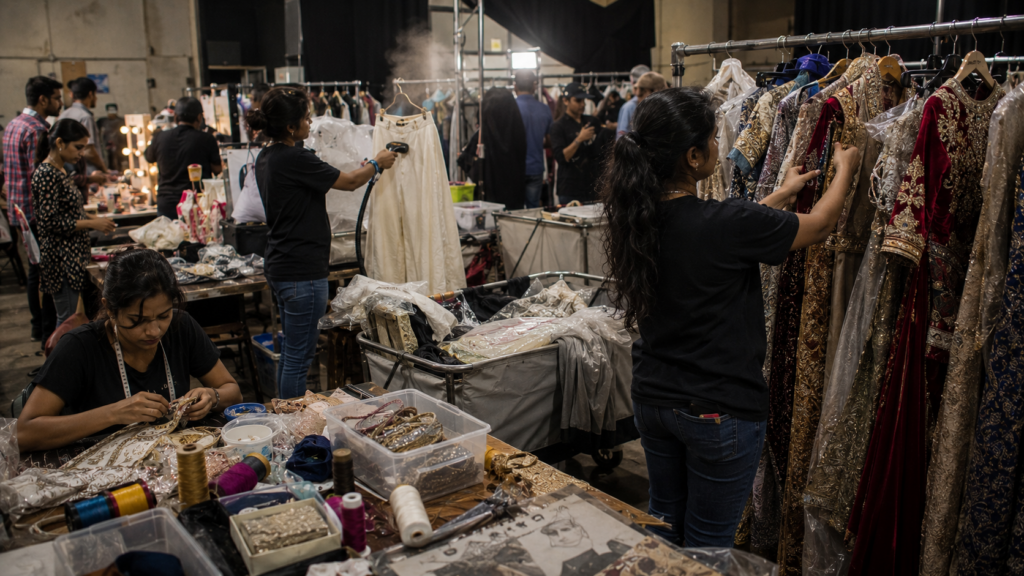
The rise of streaming platforms has expanded career opportunities beyond traditional cinema. Today, costume designers work across a wide range of productions, including:
- Feature films
- OTT web series
- Television shows
- Regional cinema
- Commercial advertisements
- Music videos
- Theatre productions
- Fashion editorials
- Celebrity styling
- Brand campaigns
Many professionals also freelance, working with production houses on a project basis. Others specialize in period dramas, fantasy productions, historical films, or contemporary styling.
Typical Career Progression
- Costume Intern or Wardrobe Assistant
- Assistant Costume Designer
- Costume Supervisor
- Costume Designer
- Senior Costume Designer or Department Head
Some experienced designers eventually establish their own costume studios or consult for multiple productions simultaneously.
Salary Expectations
Earnings vary depending on experience, production scale, location, and whether you’re employed full-time or work as a freelancer.
A realistic progression looks like this:
| Experience Level | Typical Earnings (India) |
| Entry-Level Assistant | ₹2.5 – ₹5 lakh per year |
| Assistant Costume Designer | ₹4 – ₹8 lakh per year |
| Costume Designer | ₹8 – ₹20 lakh per year |
| Senior Designers (Major Films & OTT) | ₹20 lakh+ per project, depending on scale and reputation |
Freelancers usually charge per project rather than receiving a fixed monthly salary. As your portfolio grows and you build long-term relationships with directors and producers, your earning potential increases significantly.
Future of Costume Design: Trends Shaping the Industry
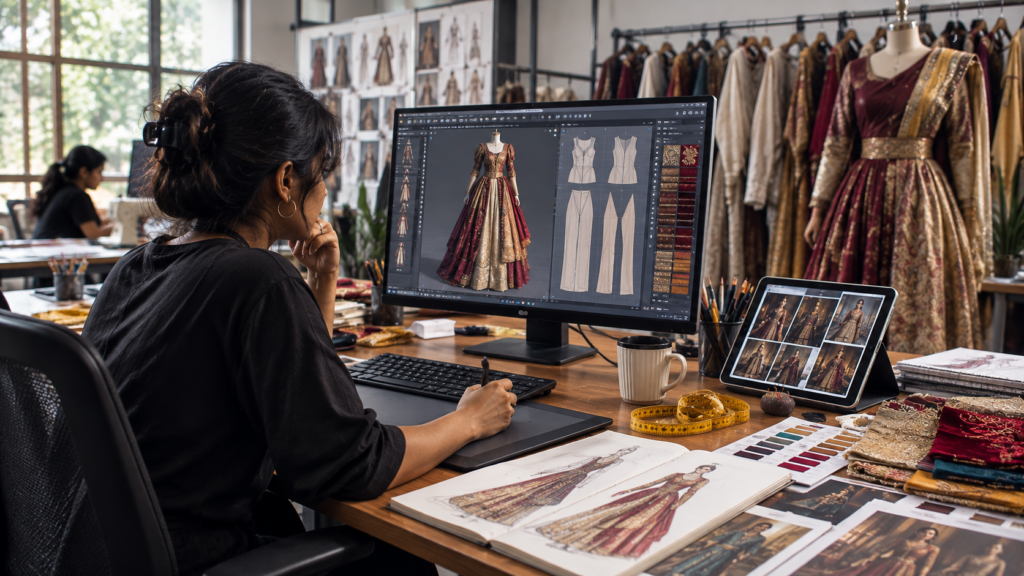
Costume design is evolving alongside technology and changing production methods. Understanding these trends can help you stay competitive.
1. OTT Growth
Streaming platforms continue to invest heavily in original content, creating more opportunities for costume designers across multiple languages and genres. Long-form storytelling has increased the demand for professionals skilled in wardrobe continuity and character evolution.
2. AI as a Creative Assistant
Artificial intelligence isn’t replacing costume designers, but it’s becoming a valuable brainstorming tool.
Many professionals now use AI to:
- Generate mood board ideas
- Explore color combinations
- Research historical references
- Visualize costume concepts
- Organize design inspiration
Creative judgment, however, remains entirely human.
3. Digital Costume Visualization
Software like CLO 3D allows designers to preview garments digitally before creating physical samples. This reduces material waste, speeds up approvals, and helps production teams visualize costumes during pre-production.
4. Sustainable Costume Design
Sustainability is becoming an important consideration in film production. Designers increasingly:
- Rent costumes instead of producing new ones
- Repurpose existing garments
- Source vintage clothing
- Use eco-friendly fabrics where appropriate
These practices reduce costs while minimizing environmental impact.
Common Mistakes Aspiring Costume Designers Make
Even talented designers can struggle if they overlook the practical realities of film production.
Treating Costume Design Like Fashion Design
Costumes exist to serve the story, not fashion trends.
Ignoring Research
Authenticity comes from understanding history, culture, and character – not from copying popular styles.
Building a Weak Portfolio
Avoid uploading only fashion illustrations. Include real projects, design reasoning, and production photos.
Skipping Assistant Roles
Working under experienced costume designers teaches budgeting, continuity, and production workflow – skills that are difficult to learn independently.
Neglecting Networking
Many film jobs are filled through recommendations. Building relationships within the industry is just as important as improving your technical skills.
Frequently Asked Questions
Is costume design a good career in India?
Yes. The growth of Bollywood, regional cinema, advertising, and OTT platforms has created increasing demand for skilled costume designers with strong portfolios and practical production experience.
Do I need a fashion design degree?
No. A degree provides valuable technical knowledge, but many successful costume designers entered the industry through theatre, apprenticeships, or assistant roles.
Which software should I learn?
Adobe Photoshop, Illustrator, Procreate, CLO 3D, and presentation tools such as Canva are commonly used for sketches, mood boards, and digital visualization.
How long does it take to become a costume designer?
Most professionals spend three to five years developing technical skills, building portfolios, assisting senior designers, and gaining production experience before leading independent projects.
Can I work as a freelance costume designer?
Absolutely. Freelancing is common in the film industry, allowing designers to work across films, OTT series, advertisements, music videos, and fashion campaigns.
Final Thoughts
Costume design is far more than selecting attractive outfits—it’s the art of translating a script into a visual language that audiences instantly understand. Every garment helps define a character’s identity, reveal their journey, and strengthen the story on screen.
The path into this profession rarely happens overnight. It requires technical expertise, creative thinking, research, collaboration, and the willingness to begin with smaller productions and assistant roles. Each project adds experience, industry connections, and confidence.
With the continued growth of films, regional cinema, and OTT platforms, there has never been a better time to pursue a career in costume design. Focus on building a portfolio rooted in storytelling rather than trends, embrace new technologies without losing your creative voice, and stay curious about people, history, and culture. Those qualities – not just artistic talent – are what transform aspiring designers into professionals trusted to bring unforgettable characters to life.