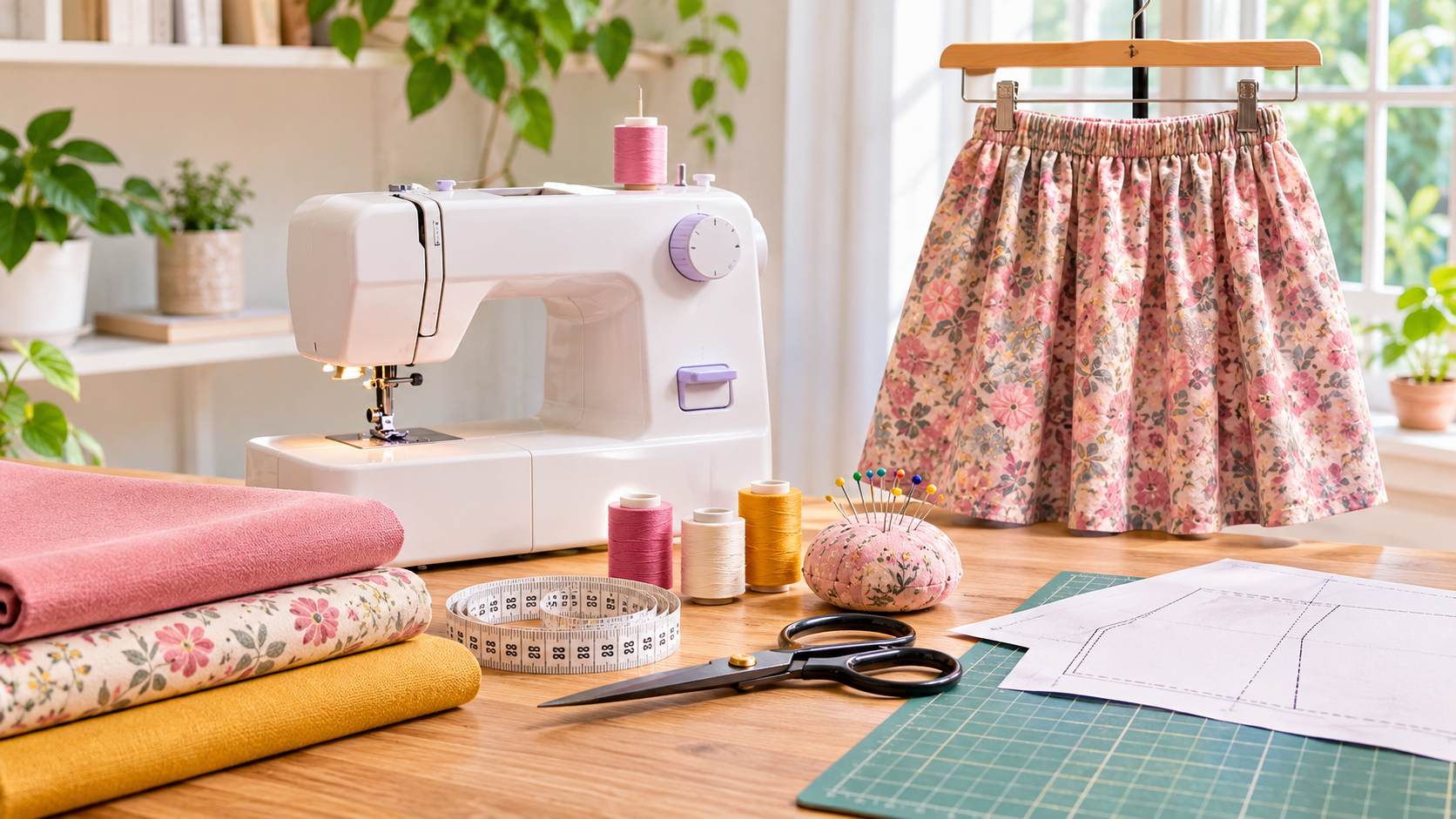
Ever looked at a beautiful outfit and thought, “I wish I could make something like that myself”? The good news is that you don’t need to be a fashion designer or have years of experience to start sewing.
Learning how to sew is easier when you know what to practise first. You don’t need an expensive sewing machine, a room full of fabric, or advanced pattern-making skills. A few basic tools, some patience, and the right learning order can take you surprisingly far.
If you’re wondering how to learn sewing from scratch, start with simple stitches, practise on fabric scraps, and gradually work towards your first wearable garment. This beginner’s guide walks you through the essentials, common mistakes, and practical projects that build your confidence one seam at a time.
Your Sewing Roadmap: Where Should You Start?
Before picking up a needle, it helps to understand the learning process.
| Learning stage | What to learn | Practice project |
| Step 1 | Sewing tools and fabric basics | Prepare your sewing kit |
| Step 2 | Sewing machine basics | Practise straight stitches |
| Step 3 | Seams, hems and edge finishing | Stitch on fabric scraps |
| Step 4 | Measuring and cutting fabric | Make a cushion cover |
| Step 5 | Pattern reading and garment construction | Sew an elastic-waist skirt |
| Step 6 | Fitting and finishing | Complete your first garment |
You don’t have to master everything at once. Move forward when you can repeat a technique comfortably.
1. Gather the Essential Sewing Tools
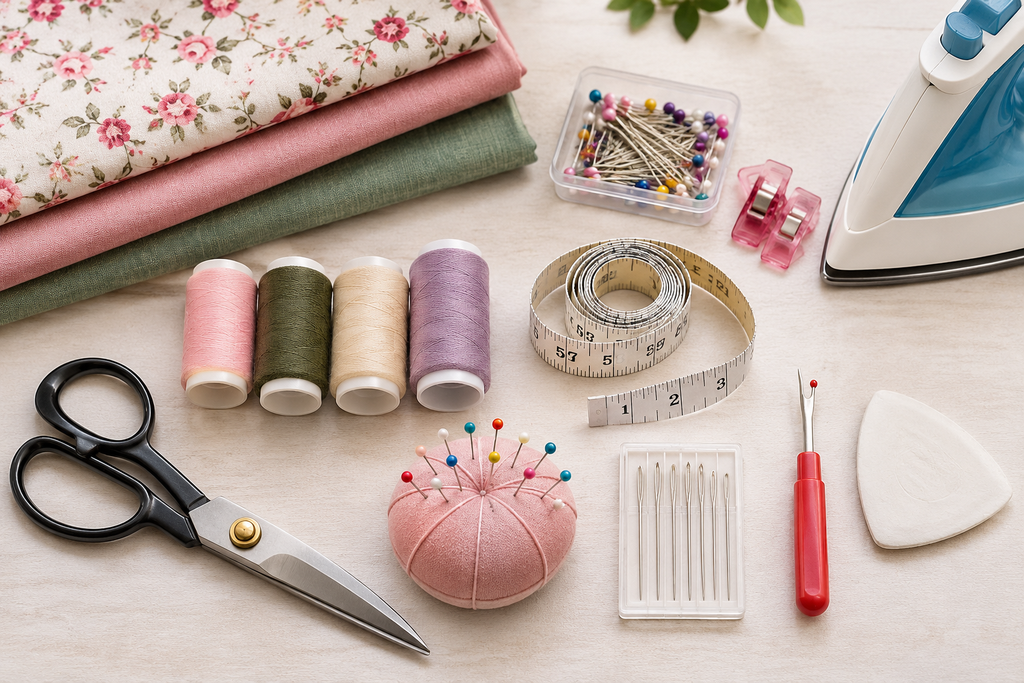
One of the biggest misconceptions about learning sewing is that you need professional equipment from day one.
You don’t. Start with the essentials.
| Sewing tool | Why you need it |
| Sewing machine | For practising stitches and joining fabric |
| Hand-sewing needles | For small repairs and finishing |
| Fabric scissors | For clean, accurate cutting |
| Measuring tape | For fabric and body measurements |
| Pins or fabric clips | To keep fabric pieces aligned |
| Seam ripper | To correct stitching mistakes |
| Tailor’s chalk or fabric marker | To mark cutting and stitching lines |
| Iron | For pressing seams and neat finishing |
Beginner tip: If you’re buying your first sewing machine, look for straightforward controls, adjustable stitch length, and basic straight and zigzag stitches. You don’t need dozens of decorative stitch options.
Which Fabric Is Best for Beginners?
Your choice of fabric can make learning much easier—or unnecessarily frustrating.
Start with medium-weight woven cotton, such as plain cotton or poplin. It’s generally easier to cut, pin and guide through a sewing machine.
Avoid these fabrics initially:
- Satin: Slippery and difficult to control.
- Chiffon: Lightweight and challenging to handle.
- Stretchy knits: Require more attention to stitch choice and fabric handling.
Once you’re confident with cotton, experiment with different fabric textures and weights.
2. Learn How to Use a Sewing Machine
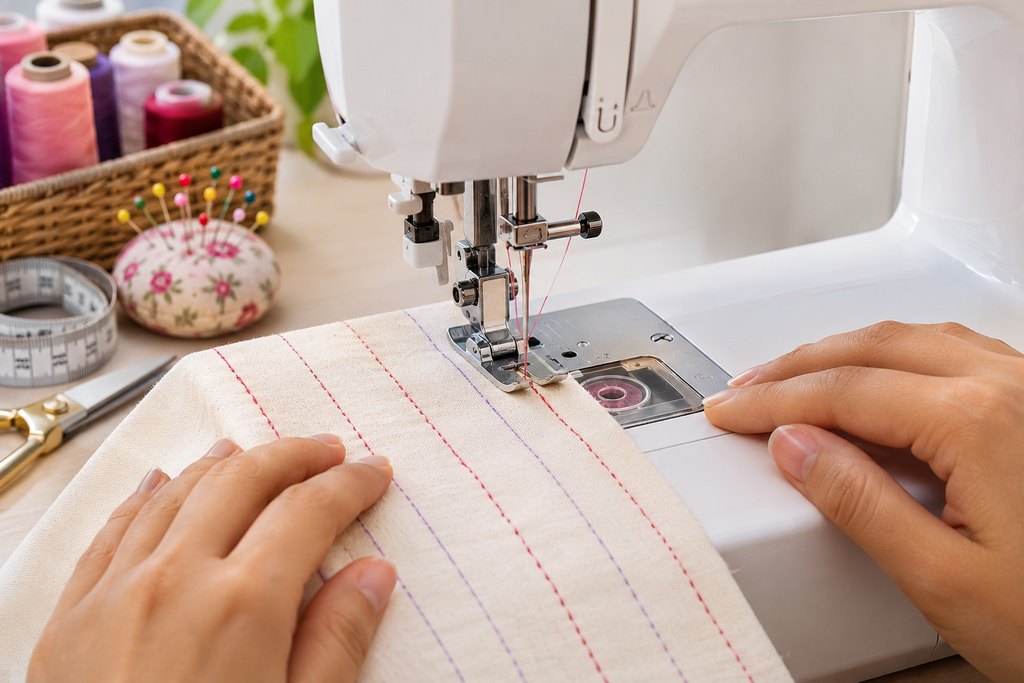
You don’t need to understand every machine setting immediately. Focus on learning how to control the machine properly.
Start with these six basics:
- Understand the presser foot, needle, handwheel and bobbin.
- Learn to thread your sewing machine correctly.
- Practise raising and lowering the presser foot.
- Sew straight lines on scrap fabric.
- Learn to secure the beginning and end of a seam.
- Practise turning corners without pulling the fabric.
Try this simple exercise: Draw five straight lines on a piece of cotton fabric. Sew along each line slowly, focusing on keeping the stitching consistent.
Repeat until you can guide the fabric without constantly stopping to correct your direction.
Always follow your machine’s manual, keep your fingers clear of the needle, and switch it off before changing needles.
3. Master the Basic Sewing Techniques
Before making clothing, learn a few fundamental techniques. You’ll use them in almost every sewing project.
Straight Stitch
The most common machine stitch. It’s used to join fabric pieces, construct garments and complete many basic sewing tasks.
Backstitching
A method of securing stitching at the beginning and end of a seam to prevent it from unravelling.
Seam Finishing
Finishing raw fabric edges helps reduce fraying. Depending on the material, you can use zigzag stitching, enclosed seams or other appropriate methods.
Hemming
Hemming creates a neat finished edge on clothing, such as skirts, trousers and sleeves.
Hand Sewing
Even if you plan to use a sewing machine, basic hand sewing is useful for attaching buttons, repairing small tears and finishing hard-to-reach areas.
Don’t overlook pressing. Pressing seams as you work can make a noticeable difference to how neatly your finished project sits.
4. Understand Basic Sewing Terms
Sewing instructions become much easier to follow once you understand the language.
| Sewing term | What it means |
| Seam allowance | Distance between the stitching line and fabric edge |
| Right sides together | Placing the outward-facing sides of fabric against each other |
| Grainline | Direction used to align pattern pieces with the fabric |
| Hem | Finished edge of a garment |
| Notches | Pattern markings that help align fabric pieces |
| Ease | Extra room in a garment beyond body measurements |
| Pattern | Template used to cut fabric into garment pieces |
You don’t need to memorise every term. Refer to this list while working on your first projects.
5. Start With Easy Sewing Projects
It’s tempting to start with a dress you’ve seen online. But fitted clothing introduces measurements, patterns, construction and finishing all at once.
A simpler project helps you develop these skills without becoming overwhelmed.
Best First Sewing Projects
| Project | Skills you’ll practise | Difficulty |
| Fabric napkin | Straight stitching and hemming | Very easy |
| Cushion cover | Measuring, cutting and seams | Easy |
| Tote bag | Joining fabric and attaching handles | Easy |
| Simple apron | Basic construction and edge finishing | Easy–moderate |
| Elastic-waist skirt | Measurements, garment assembly and hemming | Beginner garment |
Our suggestion: Start with an envelope cushion cover.
It’s practical, doesn’t require body fitting, and helps you practise several essential sewing techniques.
Once you’ve completed it, you’ll have a much clearer understanding of how flat fabric pieces become a finished product.
6. Learn Fabric Measurements and Pattern Reading
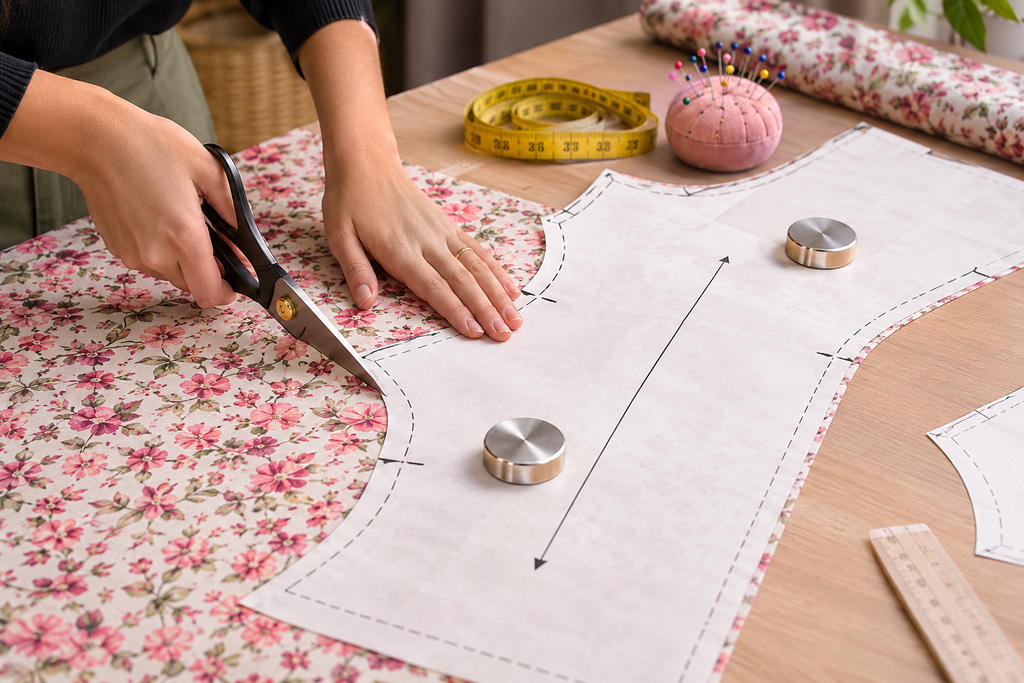
This is where sewing begins to turn into garment making.
Unlike making a cushion cover, clothing needs to fit a person’s body. That means understanding measurements, garment patterns and how fabric behaves.
Start with three essential skills.
Taking measurements: Learn to measure the waist, hips, bust and relevant garment lengths accurately.
Reading patterns: Understand size charts, grainlines, cutting layouts, notches and seam allowances.
Cutting fabric: Lay pattern pieces in the correct direction, pin or weight them securely, and cut without distorting the fabric.
A common beginner mistake is selecting a pattern based on usual clothing size. Sewing pattern sizing may differ from ready-made clothing, so always consult the pattern’s measurements.
Do You Need to Learn Pattern Making?
Not immediately.
You can use ready-made sewing patterns while learning garment construction. However, pattern making becomes valuable when you want to create original designs, understand garment fit or customise clothing.
For beginners who want to develop both skills together, SEFT’s online sewing course for beginners covers body measurements, pattern drafting, garment construction and finishing through structured practical learning.
Learning these skills together can help you understand not just how to stitch a garment, but also how its individual pieces are designed to fit and come together.
7. Sew Your First Garment
Ready to make something you can actually wear?
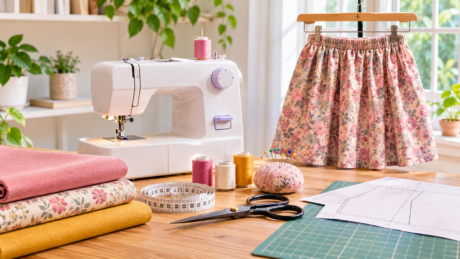
An elastic-waist skirt is a practical first garment because it generally requires fewer pattern pieces and simpler fitting than a structured dress or tailored trousers.
Choose a beginner-friendly pattern without a zip or complicated closures.
Your First Garment Checklist
- Choose your pattern: Look for a simple design suited to beginners.
- Take measurements: Use the pattern’s sizing instructions.
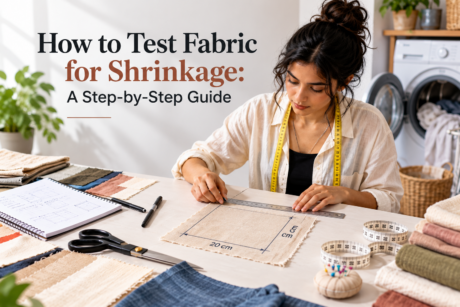
- Prepare your fabric: Prewash washable fabric as appropriate and press it before cutting.
- Cut carefully: Follow the grainline and cutting layout.
- Assemble the pieces: Follow the pattern’s sewing order.
- Check the fit: Try on the skirt before permanently finishing the waistband and hem.
- Finish the garment: Secure seams, complete the hem and give it a final press.
Your first garment doesn’t need to look professionally made.
A slightly uneven seam or imperfect hem is normal while learning. What matters is understanding what happened and knowing what you can improve next time.
8. Common Sewing Mistakes Beginners Should Avoid
Small mistakes can make sewing feel much harder than it actually is.
| Common mistake | What to do instead |
| Starting with complicated clothing | Begin with simple projects |
| Choosing slippery fabrics | Practise on stable woven cotton |
| Pulling fabric through the machine | Let the feed dogs move it |
| Ignoring seam allowances | Follow the pattern’s instructions |
| Skipping fabric preparation | Prewash when appropriate and press |
| Forgetting to test stitches | Test settings on fabric scraps |
| Rushing garment finishing | Press and check each stage |
One useful habit: Keep a small collection of practice fabric scraps. Whenever you try a new stitch, needle or setting, test it before sewing your actual project.
This can prevent unnecessary mistakes and wasted fabric.
9. How Long Does It Take to Learn Sewing?
There’s no fixed timeline. Your progress depends on practice frequency, the complexity of your projects and whether you’re learning independently or with guidance.
Here’s an example of how you could organise your first month.
| Week | Learning focus | Suggested goal |
| Week 1 | Machine setup and straight stitches | Sew consistently on scraps |
| Week 2 | Seams, hems and finishing | Complete a small fabric project |
| Week 3 | Measuring and pattern reading | Prepare fabric for a simple garment |
| Week 4 | Basic garment construction | Attempt an elastic-waist skirt |
Remember: This is a suggested practice plan, not a guaranteed timeline. Some beginners will progress faster, while others may need more time with machine control or cutting.
Consistent practice matters more than rushing to finish a project.
10. Can You Learn Sewing at Home?
Absolutely. Many beginners start sewing at home using tutorials, sewing books, pattern instructions and regular practice.
The biggest challenge is often not finding information, but knowing which skill to learn next.
Self-learning works especially well when you:
- Follow a clear beginner learning sequence.
- Practise each technique before moving forward.
- Choose projects appropriate for your skill level.
- Review mistakes rather than ignoring them.
- Seek guidance when you repeatedly encounter the same problem.
If your goal is to sew everyday items, independent learning can be a practical starting point.
If you want to progress towards fashion design, custom garments or more advanced pattern development, structured instruction and feedback may help you build a stronger foundation.
Frequently Asked Questions About Learning Sewing
Is sewing difficult to learn for beginners?
Basic sewing is accessible to beginners, although developing consistent stitching, accurate cutting and good garment fit takes practice. Starting with simple projects makes the process more manageable.
Can I learn sewing without a sewing machine?
Yes. You can start with hand sewing techniques such as running stitch, backstitch, hemming and basic repairs. However, a sewing machine becomes useful for completing larger garment projects efficiently.
What is the easiest clothing item to sew?
An elastic-waist skirt or simple loose-fitting pyjama shorts can be good first clothing projects. Choose a pattern specifically labelled for beginners.
Should I learn sewing or pattern making first?
Start with basic sewing techniques so you understand how fabric pieces are joined. You can then learn pattern making alongside garment construction to understand measurements, fit and design.
Can I learn sewing online?
Yes. Online sewing tutorials and structured courses can teach machine operation, measurements, stitching, pattern making and garment construction. Practical exercises are essential for applying what you’ve learned.
From Your First Stitch to Your First Garment
Learning to sew isn’t about making a perfect dress on your first attempt. It’s about building the skills that make each new project easier than the last.
Start with your machine, learn a few essential stitches, complete a small project, and gradually move towards constructing clothing.
Your first garment might not be perfect, but it will teach you something that watching tutorials alone never can: how to turn fabric into something you’ve made yourself.