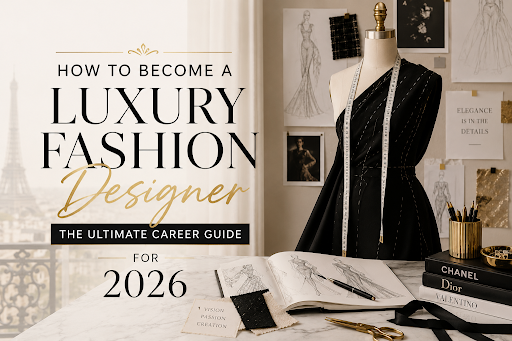
Luxury fashion is one of the most prestigious and competitive industries in the world. From haute couture runways in Paris to global luxury houses like Chanel, Dior, and Louis Vuitton, luxury fashion represents far more than expensive clothing. It is built on craftsmanship, exclusivity, heritage, storytelling, and artistic identity.
However, becoming a luxury fashion designer requires much more than learning how to sketch garments. The luxury fashion industry expects designers to understand premium construction, textile quality, branding, cultural storytelling, and high-level creative execution. Modern luxury fashion is also evolving rapidly with AI-assisted design, digital fashion, sustainability, and creator-driven branding transforming the industry.
Whether you dream of working at a luxury fashion house, launching your own couture label, or becoming a creative director, this guide explains everything you need to know about becoming a luxury fashion designer in 2026.
What Is a Luxury Fashion Designer?
A luxury fashion designer creates premium fashion collections for high-end brands, couture houses, designer labels, or elite clientele. Unlike mass-market fashion, luxury fashion focuses heavily on detail, craftsmanship, exclusivity, and emotional storytelling.
Luxury designers may work in areas such as:
- Haute couture
- Luxury ready-to-wear
- Bridal couture
- Luxury streetwear
- Accessories and handbags
- Footwear
- Digital luxury fashion
Luxury garments are not designed only to be worn. They are created to communicate status, culture, identity, and artistic value.
Step-by-Step Guide to Becoming a Luxury Fashion Designer
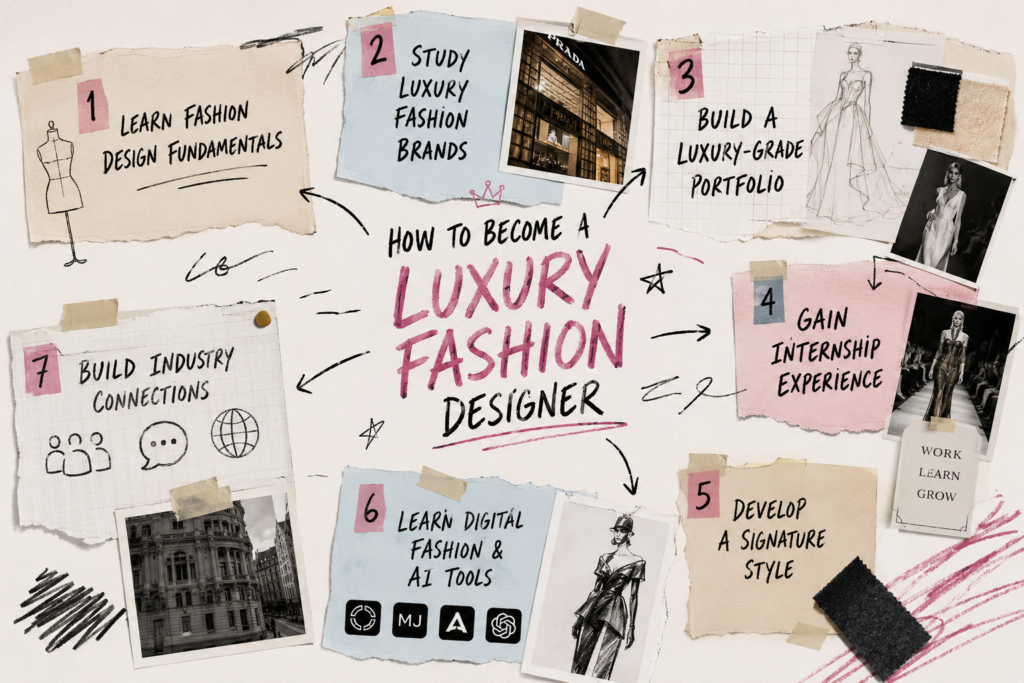
Step 1: Learn Fashion Design Fundamentals
Start by mastering the basics of fashion design, including:
- Fashion illustration
- Draping
- Textiles
- Garment construction
- Pattern making
- Fashion history
These fundamentals form the foundation of luxury fashion design.
Step 2: Study Luxury Fashion Brands
Analyze luxury fashion houses like Hermès, Prada, Gucci, and Balenciaga to understand their aesthetics, storytelling, tailoring, and craftsmanship.
Study their:
- Runway collections
- Branding strategies
- Fabric choices
- Visual presentation
- Construction quality
Understanding how luxury brands communicate identity is extremely important.
Step 3: Build a Luxury-Grade Portfolio
Your portfolio is one of the most important tools in your fashion career. A luxury portfolio should feel polished, conceptual, and visually refined.
A strong portfolio should include:
- Collection concepts
- Fashion sketches
- Technical flats
- Draping work
- Textile experimentation
- Editorial-quality visuals
Luxury brands look for originality, strong storytelling, and technical precision in portfolios.
Step 4: Gain Internship Experience
Internships are one of the best ways to enter the luxury fashion industry. They help designers understand atelier workflows, production processes, and industry expectations.
Valuable internship opportunities include:
- Fashion weeks
- Luxury ateliers
- Design studios
- Fashion magazines
- Couture workshops
Industry exposure plays a major role in building luxury fashion careers.
Step 5: Develop a Signature Style
Luxury designers are often recognized for their unique design language. Some become known for tailoring techniques, fabric manipulation, silhouettes, or conceptual storytelling.
Developing a recognizable creative identity helps designers stand out in a highly competitive market.
Step 6: Learn Digital Fashion & AI Tools
Luxury fashion is becoming increasingly digital. Modern brands are now using AI-assisted design, virtual prototyping, and digital garment simulation tools.
Important tools include:
- CLO 3D
- Midjourney
- Adobe Firefly
- ChatGPT
Designers who combine craftsmanship with digital innovation will have a significant advantage in the future.
Step 7: Build Industry Connections
Networking is extremely important in luxury fashion. Designers should actively attend fashion events, exhibitions, competitions, and workshops to build visibility.
Platforms like Instagram and LinkedIn also help designers showcase their work and connect with industry professionals.
Skills Needed to Become a Luxury Fashion Designer
Luxury fashion demands a combination of artistic creativity, technical precision, and business understanding. Successful luxury designers are not only creative thinkers but also strong executors who understand garment quality and brand identity.
Fashion Illustration & Design Communication
Fashion illustration remains one of the foundational skills in luxury fashion. Designers use sketches, concept boards, and technical drawings to communicate their ideas clearly.
Even though AI tools are becoming more common in fashion design, luxury brands still value strong visual communication skills because they help express silhouettes, garment construction, and storytelling effectively.
Draping & Garment Construction
Luxury garments require exceptional tailoring and construction quality. Designers must understand draping, pattern making, couture finishing, and garment structure to create premium silhouettes.
Important construction skills include:
- Pattern making
- Tailoring
- Corsetry
- Couture finishing
- Internal garment structuring
Strong construction knowledge allows designers to create sculptural and sophisticated garments with precision.
Textile & Fabric Knowledge
Luxury fashion is deeply dependent on textile quality. Designers should understand fabrics such as silk gazar, cashmere, organza, wool, leather, lace, and couture textiles.
Luxury consumers expect fabrics to feel exceptional, maintain structure, and age beautifully over time. Because of this, textile understanding becomes one of the most important aspects of luxury fashion design.
Craftsmanship & Attention to Detail
Luxury fashion is built on perfection and detailing. Small elements such as embroidery, stitching, lining, fit, and finishing can completely change how luxurious a garment feels.
Luxury garments often include:
- Hand-finishing
- French seams
- Hand-rolled hems
- Couture-level detailing
Precision and craftsmanship are what separate luxury fashion from fast fashion.
Creativity & Artistic Identity
The most successful luxury designers are known for their unique creative voice. Luxury fashion rewards originality and signature aesthetics more than imitation.
Designers who build recognizable silhouettes, strong storytelling, and a distinctive visual language often stand out in the competitive luxury market.
Luxury Branding Knowledge
Luxury fashion is not only about garments — it is also about perception and experience. Designers must understand branding, customer psychology, exclusivity, and emotional storytelling.
Modern consumers buy identity and aspiration, not just clothing.
Watch: what actually goes into a luxury price tag, from craftsmanship to branding and heritage.
Career Paths in Luxury Fashion
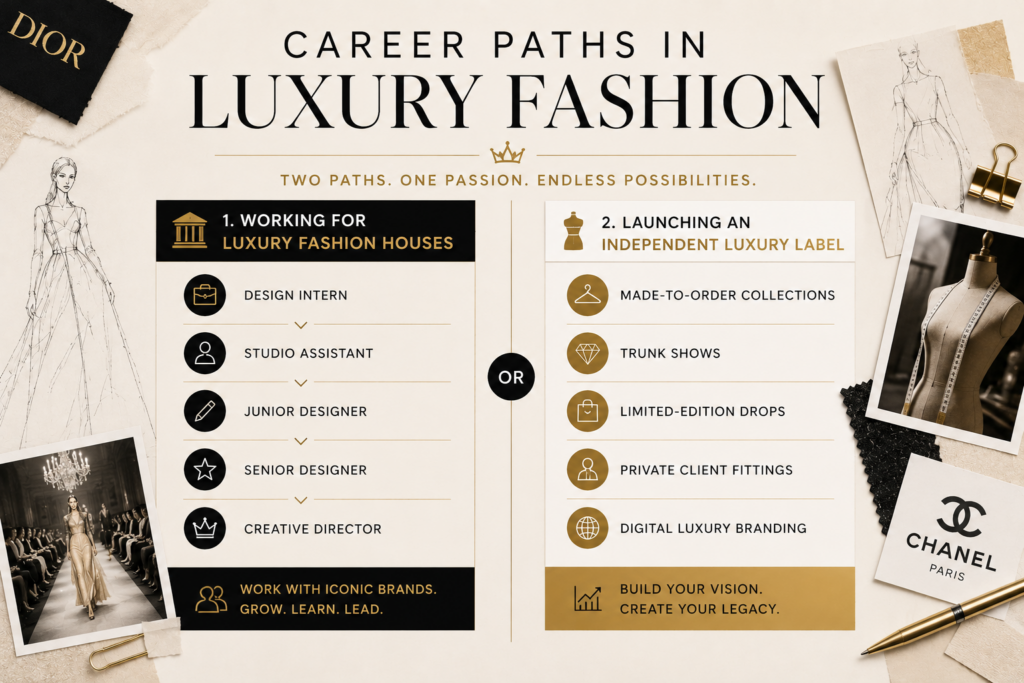
Luxury fashion careers usually follow two main paths.
Working for Luxury Fashion Houses
This is the traditional route where designers work with global luxury brands and fashion conglomerates.
Typical career progression includes:
- Design Intern
- Studio Assistant
- Junior Designer
- Senior Designer
- Creative Director
Most luxury brands recruit through internships, portfolio reviews, and fashion school networks.
Launching an Independent Luxury Label
Many designers now launch independent luxury brands through direct-to-consumer business models and digital storytelling.
Common launch strategies include:
- Made-to-order collections
- Trunk shows
- Limited-edition drops
- Private client fittings
- Digital luxury branding
Social media and creator branding have made it easier for independent designers to build niche luxury audiences.
Salary of a Luxury Fashion Designer
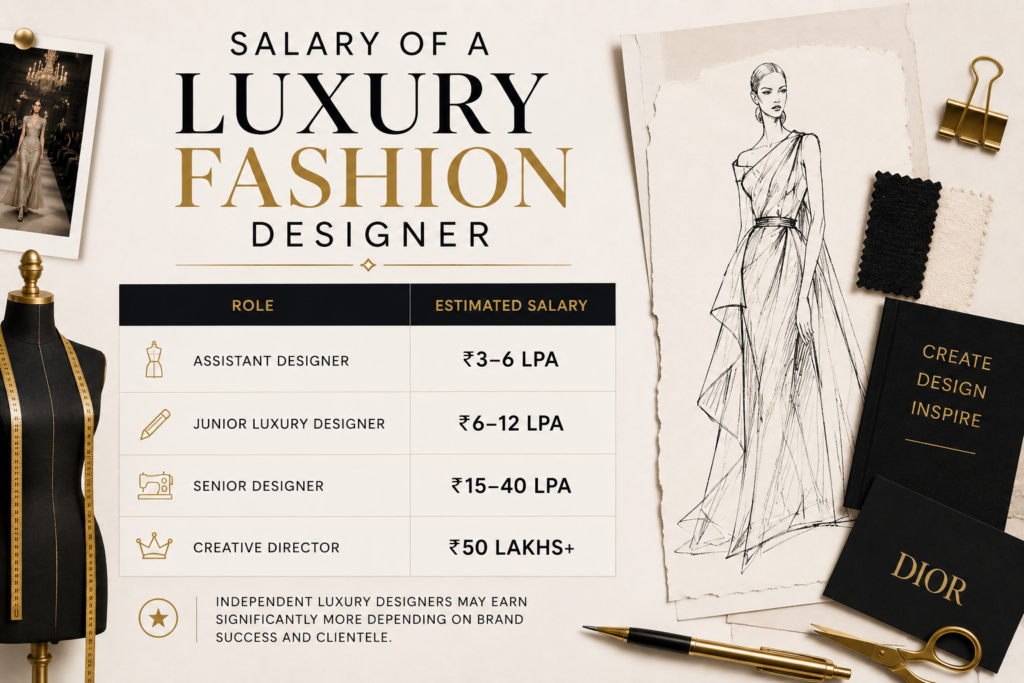
Luxury fashion salaries vary depending on experience, location, role, and brand reputation.
| Role | Estimated Salary |
| Assistant Designer | ₹3–6 LPA |
| Junior Luxury Designer | ₹6–12 LPA |
| Senior Designer | ₹15–40 LPA |
| Creative Director | ₹50 Lakhs+ |
Independent luxury designers may earn significantly more depending on brand success and clientele.
Can You Become a Luxury Fashion Designer Without a Degree?
Yes, it is possible to become a luxury fashion designer without a formal degree. Many designers succeed through self-learning, portfolio development, internships, and independent experimentation.
However, luxury fashion is highly competitive, so strong technical skills and a professional-quality portfolio are essential.
Conclusion
Becoming a luxury fashion designer requires far more than creativity alone. Luxury fashion combines craftsmanship, storytelling, branding, artistic identity, and technical mastery into one highly specialized field.
The journey usually involves learning fashion fundamentals, building a strong portfolio, gaining internships, studying luxury brands, and developing a signature creative voice. While the industry is highly competitive, designers who combine originality, craftsmanship, innovation, and branding can build highly successful careers in luxury fashion.
Luxury fashion remains one of the most prestigious and creatively rewarding industries in the world.
Frequently Asked Questions
How long does it take to become a luxury fashion designer?
It usually takes several years of education, portfolio building, internships, and industry experience to establish a career in luxury fashion.
Do luxury fashion designers need a degree?
A degree is not mandatory, but formal fashion education provides technical training, networking opportunities, and industry exposure.
Which countries are best for luxury fashion?
France, Italy, and the United Kingdom are considered major global luxury fashion centers.
What skills do luxury fashion designers need?
Luxury designers need skills such as sketching, draping, textile knowledge, craftsmanship, branding, and storytelling.
Can beginners enter luxury fashion?
Yes. Most designers begin through fashion education, internships, assistant roles, and portfolio development.
How much do luxury fashion designers earn?
Luxury fashion designers can earn anywhere from beginner-level salaries to extremely high incomes depending on experience, clientele, and brand success.