

The Dream, the Reality, and the Growing Gap

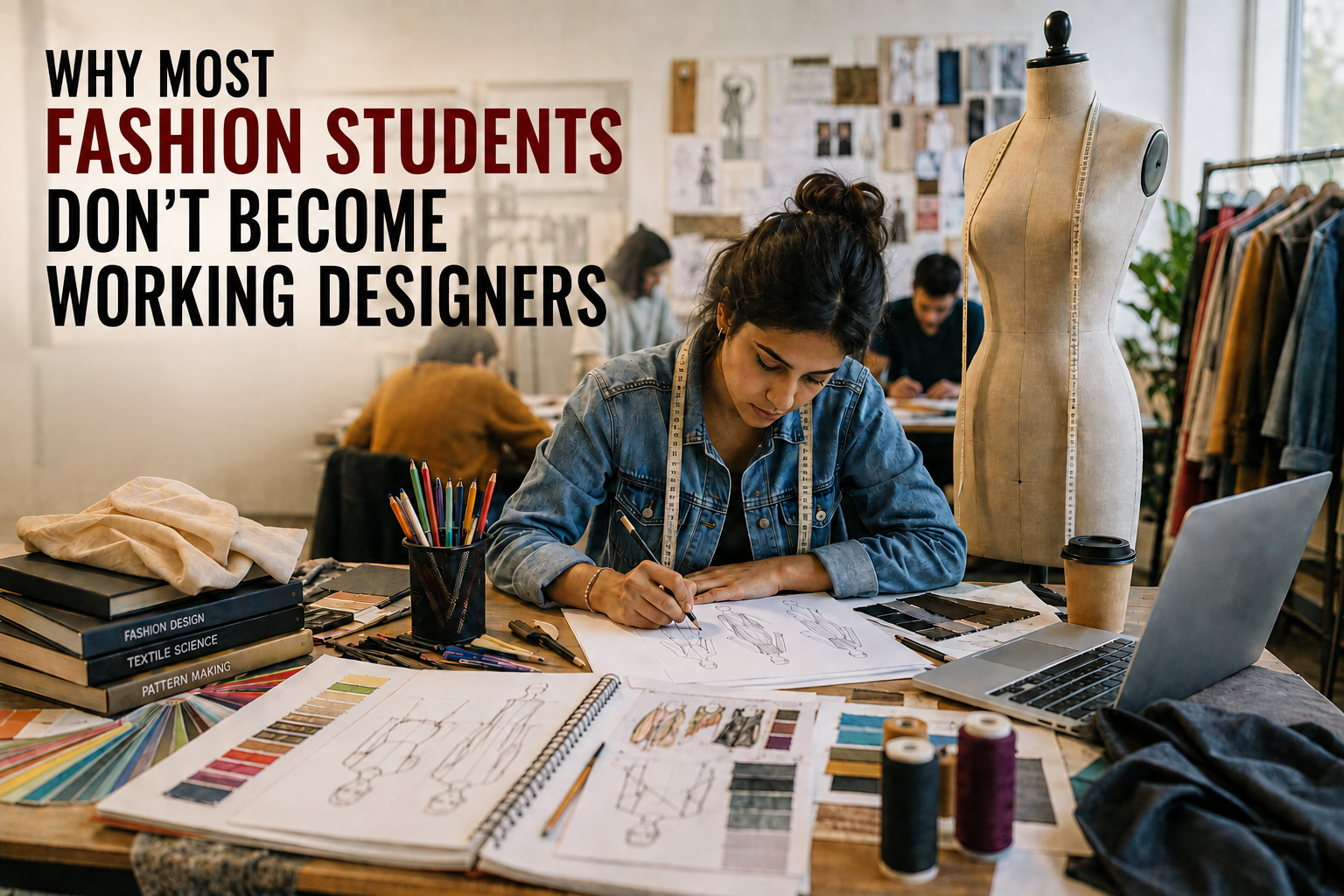
Every year, thousands of students enter fashion design programmes at NIFT, Pearl Academy, NID, and other Indian institutes dreaming of launching their own label or becoming a creative director. These institutes nurture that ambition through studio projects and graduation showcases. Yet the years after graduation tell a different story.
Only a relatively small share of graduates go on to build long-term careers as working designers – and this isn’t unique to India. A Council of Fashion Designers of America survey covering 23 U.S. fashion schools found that only about 1 in 10 graduates went on to work in actual design roles, according to reporting by Business of Fashion. In the UK, career-services firm Prospects has reported that while more than 85% of fashion graduates find employment of some kind, just over half build a career specifically in fashion or design.
India’s placement numbers tell a similar story once you look past the headline figure. Institute placement reports often quote strong overall placement rates, but those offers span design, technical, merchandising, and retail roles together – a graduate placed as a merchandiser or quality executive still counts as “placed,” even though it isn’t the runway-design career many pictured at enrolment.
Many graduates move into merchandising, buying, or styling – often at export houses in Gurugram, Bengaluru, Tirupur, or Ludhiana, or at fashion e-commerce firms like Myntra, Ajio, and Nykaa Fashion. The uncomfortable question: if so many students are passionate about fashion, why do so few become working designers? It isn’t lack of talent – it’s the disconnect between what students are taught and what India’s fashion and export industry actually needs.
Watch: seven reasons fashion designers quit too soon.
Fashion School and the Industry Are Not the Same Thing
In the classroom, faculty reward originality and personal style. Employers ask something else: can this graduate design within our costing, understand our vendor base, and adapt to a merchandiser’s feedback? This is why students with excellent grades sometimes struggle to land design roles, while graduates with average records but stronger practical exposure move faster.
Composite example: Placement counsellors at Indian design institutes see this repeatedly – of two students with near-identical records, the one who spent a summer at a Tirupur export unit typically gets shortlisted faster, simply because they can show they’ve handled a tech pack, tracked a sample through a vendor, or sat in on a costing discussion.
The gap isn’t intelligence. It’s industry readiness.
India’s Fashion Industry Has Moved Faster Than Many Classrooms
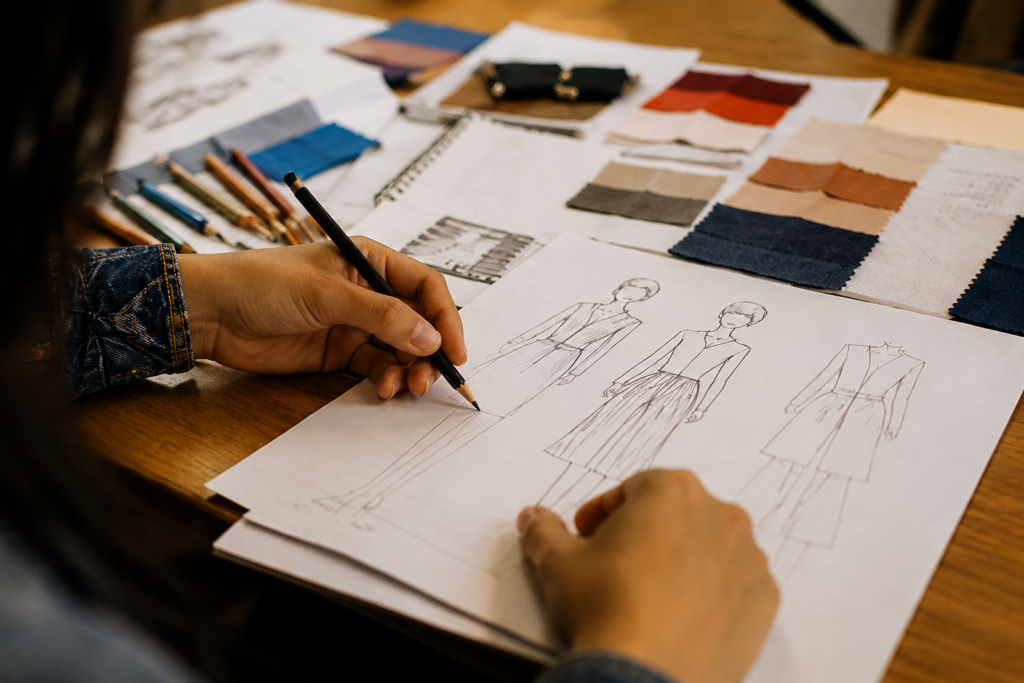
India remains one of the world’s largest apparel exporters, and that export engine shapes most fashion jobs. Designers now need digital illustration, 3D visualization, sustainable sourcing, and cost engineering in rupees per piece – not just sketching. Junior designers often spend more time on tech specs and vendor coordination than on original concepts, while many curricula still centre on conceptual collections and runway presentations.
India’s Free Trade Agreements with the UK and EU, and ongoing US trade talks, have expanded market access for Indian apparel exporters – good news for the industry, but it mainly grows technical, production, and compliance-linked roles rather than pure “designer” headcount.
The Biggest Myth: “If I’m Talented Enough, Someone Will Discover Me”
Brands and export houses hire people who reduce risk – graduates who already understand construction, delivery timelines, vendor limitations, and how design fits within a landed cost. Talent opens the door; professional readiness determines whether someone walks through it.
Why Fashion Is More Competitive Than Students Realise
Design institutes across India – NIFT’s 19 campuses among them – produce thousands of aspiring designers yearly, but domestic labels and export houses aren’t creating pure design jobs at the same pace. Most hiring volume sits in technical, merchandising, and production roles: Technical Designers, Merchandisers, Pattern Masters, Quality Executives, Sustainability/Compliance Specialists, and Digital/3D Specialists. Students who explore these paths early usually find more opportunity than those focused solely on becoming a runway designer.
Success Is No Longer About Design Alone
The modern Indian fashion professional sits at the intersection of creativity, vendor management, and business. A beautiful sketch is valuable; a garment that hits its costing, sources correctly (Surat for fabric, Tirupur for knits, Jaipur for prints), and meets sustainability commitments is far more valuable. This doesn’t make fashion less creative – it makes creativity more impactful.
The Hidden Structural Problem
Institutes sell a dream; employers hire for reality. Promotional material showcases ramp shows and celebrity alumni, creating the impression that design is the natural outcome of a degree. Most graduates actually start by updating tech specs, coordinating with factories, and preparing documentation for buying houses. Students who understand this beforehand adapt faster.
The “Creative Director” myth begins in college. Institutes teach the work of a handful of legendary names, but students hear far less about steady-demand roles like Technical Designer, QA Executive, or Compliance Manager – roles in constant demand across India’s export-oriented manufacturing base.
“Not job ready” is usually about training cost, not fairness. A graduate who already understands a tech pack, costing sheet, and production timeline becomes productive faster. It doesn’t mean graduates lack talent – it means they often lack exposure before graduation.
Creativity has commercial boundaries. Every collection exists within landed cost, available domestic fabric, delivery deadlines, and buyer sustainability commitments. Designing within those constraints – not around them – is the deeper design skill.
Fashion is an ecosystem, not just designers. A garment moving from an Indian export house to an international retailer involves designers, technical designers, pattern masters, merchandisers, and compliance teams.
Composite example: Counsellors often describe students certain they want to be “designers” who discover, after a merchandising internship at a buying house, that they enjoy that side of the business more – not a failure, but finding the right seat in the ecosystem.
The Portfolio, Networking, and Experience Gap

Grades prove you can succeed in college; experience proves you can succeed in business. Not every valuable internship needs to be at a luxury house:
- Export houses (Gurugram, Bengaluru, Tirupur, Ludhiana) teach production and technical documentation.
- Independent designers teach client communication with limited resources.
- D2C brands teach lean entrepreneurship.
- Textile clusters (Surat, Bhiwandi, Panipat) teach sourcing.
- E-commerce platforms teach digital merchandising at scale.
Many fashion jobs in India are never advertised – a designer needing help often asks “do we know anyone suitable?” first, and that recommendation comes from a former intern, batchmate, or faculty member. Hiring managers also notice how candidates explain their work – whether they can discuss failures honestly. Professional maturity often impresses more than a polished but untested portfolio.
Technical Skills, Business Knowledge, and AI
Once a concept is approved, a designer needs tech packs, fabric selection, sample review, and spec revisions for the factory floor. Skills companies hire for: Adobe Illustrator, Photoshop, CLO 3D, Browzwear, Gerber AccuMark; garment construction and pattern adjustments; textile knowledge across India’s mill base; and vendor-coordinated product development.
AI assists, it doesn’t replace. AI already helps with trend forecasting and image generation, but it can’t judge whether Indian consumers will connect with a design or whether a vendor can produce it at the target price. Graduates who pair AI tools with critical thinking gain a real advantage.
Sustainability and compliance are no longer optional. With India’s growing export volumes and new trade agreements, overseas buyers audit sourcing and manufacturing practices closely – a skill set genuinely in demand.
A Practical Roadmap
- Year 1: Foundations – construction, pattern making, exploring sectors.
- Year 2: Real experience – internships at export houses or independent labels, competitions, industry software.
- Year 3: A commercially-minded portfolio. Six outstanding projects beat twenty average ones.
- Final year: Tailor the portfolio per recruiter, practice interviews, research target companies before placement season.
Common Myths That Hold Students Back
- Only natural talent succeeds. Discipline builds careers more reliably.
- An institute’s name guarantees success. Employers hire individuals, not college brands.
- You must work for a luxury house. Rewarding careers exist across export manufacturing, D2C, and digital fashion.
- AI will replace designers. Design still needs empathy and judgment, hard to automate.
- Graduation means you’re ready. It’s the beginning of professional growth, not the finish line.
Frequently Asked Questions
Why do many Indian fashion graduates never work as designers? Limited industry experience, weak portfolios, and a gap between institute curricula and what export houses actually need. Global data – a CFDA review of 23 U.S. schools reported by Business of Fashion – puts graduates entering design roles at roughly 10%; Indian placement reports show a similar split between “placed” and “placed as a designer specifically,” though a single authoritative India-wide figure isn’t publicly available.
Is a design degree from NIFT or similar enough? Not alone. It provides a foundation, but employers also want internships, costing knowledge, and a portfolio showing real problem-solving with Indian vendors and price points.
What skills do Indian fashion companies value most? Garment construction, digital design software, sourcing and vendor management, sustainability/compliance awareness, and customer understanding.
Can AI replace fashion designers? It assists with trend analysis and efficiency, but human judgment and cultural understanding of Indian consumers remain essential.
How can students improve their hiring chances? Start gaining experience early – even at a small export unit – build a commercially focused portfolio, and network with placement cells, faculty, and alumni.
Conclusion
India’s fashion industry doesn’t need more graduates – it needs graduates who are prepared. Those who combine creativity with costing and sourcing knowledge, adaptability, and real-world experience won’t just get placed. They’ll build lasting careers in one of India’s most globally significant industries.