Six months from now, could you be sketching your own fashion collection, understanding fabrics and even creating your first garment? Or would you simply have another certificate?
It’s an important question when you’re considering a short-term fashion design course.
You don’t necessarily need years of education to begin learning fashion design. Six months of structured training can introduce you to illustration, design development, pattern making, sewing and portfolio creation.
But there’s a difference between learning the fundamentals and becoming an experienced designer.
Yes, six months can be enough to develop foundational fashion design skills. Your progress depends on what the course teaches, how much practical work it includes and how consistently you practise.
Here’s what you can realistically learn, what might take longer and how to decide whether six months is right for you.
What Can You Learn in a 6-Month Fashion Designing Course?
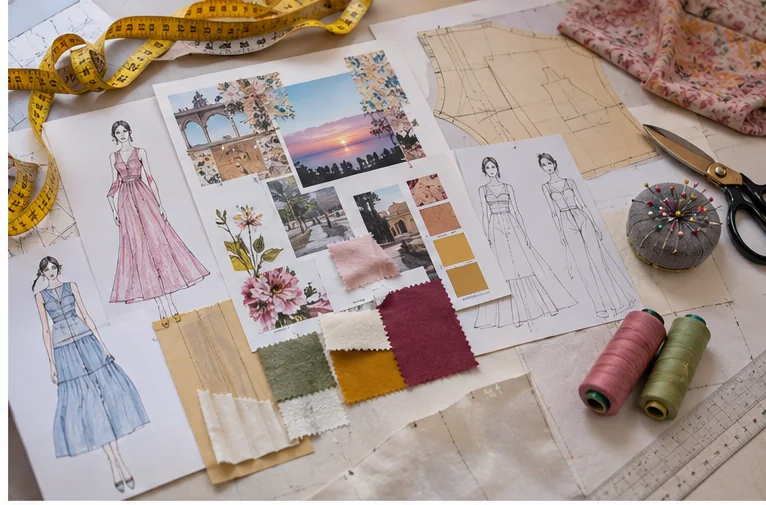
Fashion design involves more than sketching beautiful outfits. You need to understand how clothing is conceptualised, how fabrics behave and how a design becomes a wearable garment.
A comprehensive beginner programme may introduce six essential areas:
| Subject | What you’ll learn | Practical outcome |
| Fashion illustration | Fashion figures, poses, silhouettes and garment details | Original outfit sketches |
| Colour and fabric | Colour combinations, textures and fabric characteristics | Mood boards and fabric selections |
| Design development | Inspiration research and collection planning | A coordinated mini collection |
| Pattern making | Measurements, basic blocks and pattern development | Patterns for simple garments |
| Sewing and construction | Cutting, stitching, assembly and finishing | Sewing samples or a basic garment |
| Portfolio development | Organising and presenting creative work | A beginner fashion portfolio |
Not every six-month programme covers all these subjects. Some focus primarily on illustration, while others include practical garment construction.
For beginners interested in both creative and technical skills, a 6 months fashion designing course that combines illustration, design development, pattern making and sewing can provide a broader introduction to the design process.
Before enrolling, check what you’ll actually create—not just which subjects appear in the syllabus.
A Realistic Month-by-Month Fashion Design Learning Journey
What does learning fashion design over six months actually look like?
The following roadmap illustrates how a beginner-friendly programme might progress. Actual modules and timelines vary between institutes.
Month 1: Learn Fashion Sketching and Design Basics
You don’t need to be an exceptional artist to begin.
Your first lessons may introduce fashion figure proportions, poses, silhouettes, garment details and basic design principles.
You’ll begin noticing how necklines, sleeves, proportions and garment lengths change the appearance of an outfit.
Your milestone: Create several original fashion sketches showing different clothing styles.
The goal isn’t perfect artwork. It’s learning to communicate your ideas visually.
Month 2: Understand Fabrics, Colours and Rendering
Imagine designing a flowing summer dress but choosing a stiff fabric that doesn’t move the way you imagined.
That’s why understanding materials matters.
You may explore colour theory, fabric characteristics, textures, prints and illustration techniques for representing different materials.
Your milestone: Develop outfit illustrations showing fabric textures, colour combinations and garment details.
Month 3: Develop Your First Fashion Collection
Creating individual sketches is one thing. Designing a coordinated collection requires more thought.
You’ll explore inspiration research, mood boards, design themes and customer preferences.
For example, you could develop five contemporary Indian streetwear looks using a consistent colour palette.
Your milestone: Create a mini collection with a clear concept and coordinated designs.
Month 4: Refine Your Design Skills
As your confidence improves, you may explore advanced illustration, garment variations, decorative techniques and more detailed design development.
Depending on the programme, this stage might include couture concepts, menswear or kidswear.
Your milestone: Present more refined designs and explain your choices of fabrics, colours and silhouettes.
Month 5: Understand Pattern Making
This is where your designs begin moving from paper towards real garments.
Pattern making involves translating measurements and garment ideas into templates used to cut fabric.
You may practise basic bodice blocks, skirts, sleeves and introductory fitting adjustments.
Your milestone: Draft a simple pattern and understand how the individual pieces form a garment.
Month 6: Explore Sewing and Portfolio Development
If practical garment construction is included, you may learn machine handling, seams, cutting, assembly and finishing.
You’ll also begin organising your strongest work into a portfolio.
Your milestone: Present sketches, design projects, patterns and practical samples, with a completed simple garment where your training allows.
This roadmap is illustrative rather than a guaranteed six-month syllabus.
Can You Really Make Clothes After Six Months?
Potentially, yes—but your progress depends on how much hands-on training you receive.
Someone who regularly practises pattern making and sewing may be able to create simple garments with guidance.
Consider an A-line skirt.
To make one, you would need to:
- Sketch the design and decide on its length.
- Select a suitable fabric.
- Take measurements and prepare a pattern.
- Cut and assemble the fabric pieces.
- Check the fit and make corrections.
- Finish the seams, waistband and hem.
Even a simple skirt involves multiple technical skills.
Making your first garment can be a meaningful achievement. However, creating one piece under supervision doesn’t mean you’re ready to handle complex customer orders independently.
The next stage involves improving fitting accuracy, construction quality, consistency and speed.
What Can’t You Master in Just Six Months?
A short course can introduce essential skills, but some areas require considerably more practice.
Advanced garment construction
Structured jackets, elaborate bridalwear, complex draping and detailed couture garments involve advanced technical skills.
Understanding their design is different from being able to construct them independently.
Professional fitting
Taking measurements is only the beginning. Making accurate adjustments for different body shapes and fabrics takes repeated practice.
Running a clothing business
Design education alone won’t teach you everything about sourcing, pricing, inventory, production deadlines and customer management.
Developing your signature style
A distinctive creative identity develops through experimentation, feedback and experience.
Six months can help you understand the process. Practice helps you improve your execution.
Is a 6-Month Fashion Designing Course Suitable for Beginners?
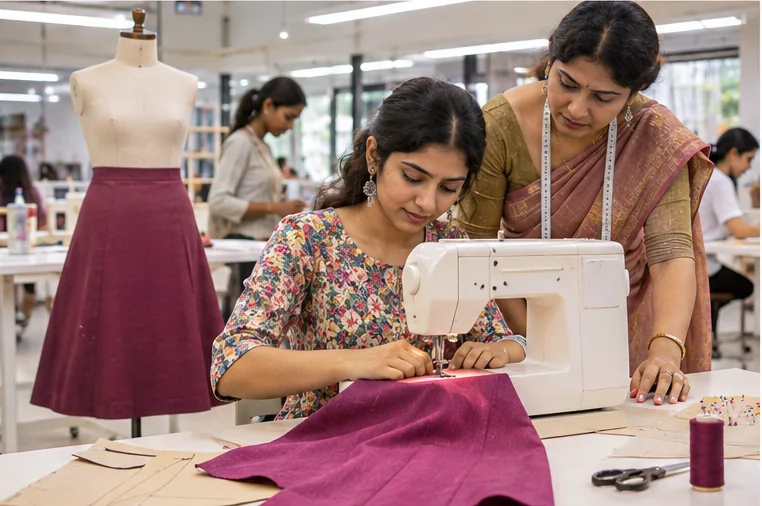
Yes, provided the programme teaches the fundamentals and doesn’t assume significant previous experience.
It may suit:
- Students exploring fashion as a career.
- Creative beginners interested in clothing and design.
- Working professionals considering a career change.
- Individuals interested in making their own garments.
- Aspiring boutique owners exploring fashion-related skills.
Do You Need Drawing or Sewing Experience?
Not necessarily.
Many introductory programmes begin with fashion figure drawing, basic illustration and introductory garment-making techniques.
You don’t need to draw perfectly before joining, but you should be willing to practise regularly.
If sewing is important to you, check whether the course includes basic machine handling and supervised construction exercises.
How Much Practice Is Needed Outside Class?
Here’s something beginners often overlook: Six months of enrolment doesn’t necessarily mean six months of intensive practical training.
Two programmes with identical durations may provide very different teaching hours.
As a personal practice plan, you could aim for:
| Activity | Suggested weekly practice |
| Fashion sketching | 2–3 hours |
| Design research and colour exercises | 1–2 hours |
| Pattern making or sewing | 2–3 hours |
| Portfolio development | 1 hour |
These are suggested practice targets, not official programme requirements.
Consistent practice helps you identify mistakes, understand feedback and gradually improve your technical abilities.
For online learning, also consider whether you have access to the necessary tools and equipment.
What Should Your Fashion Design Portfolio Include?
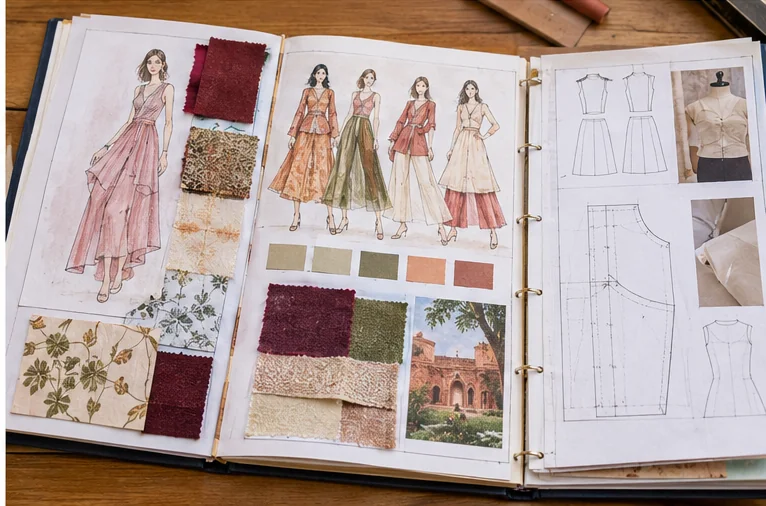
A portfolio should demonstrate what you can actually do, not simply what you’ve studied.
After six months, a beginner portfolio might include:
- Fashion sketches: Original clothing ideas and silhouettes.
- Mood boards: Research, inspiration and colour palettes.
- Mini collections: Coordinated outfits developed around a concept.
- Fabric studies: Texture experiments and material selections.
- Pattern-making projects: Introductory patterns and fitting exercises.
- Practical samples: Sewing exercises or completed garments, where applicable.
What Makes a Beginner Portfolio Impressive?
Imagine designing a summer dress.
Instead of displaying only the finished illustration, show your inspiration, original sketch, fabric selection, design changes and final outcome.
This demonstrates how you approach a design problem.
An imperfect project with thoughtful corrections can reveal more learning than a polished drawing without an explanation.
Focus on quality, creative thinking and visible progress rather than the number of projects.
Is a 6-Month Fashion Designing Course Enough to Get a Job?
A short-term course can help you develop relevant skills, but certification alone doesn’t guarantee employment.
Employers may consider your portfolio, practical abilities, previous education and experience.
Depending on the role and eligibility requirements, you could explore:
| Career direction | Skills you may need |
| Fashion design trainee | Sketching, research and design development |
| Design studio assistant | Sample organisation and production support |
| Freelance fashion illustrator | Original illustrations and client-brief interpretation |
| Boutique assistant | Garment knowledge, measurements and communication |
| Further fashion education | Foundational skills and portfolio development |
Some opportunities may require recognised qualifications or previous industry experience.
Instead of focusing only on whether a certificate can get you a job, consider what your practical work demonstrates.
A portfolio that shows your thinking, technical progress and completed assignments can be valuable when applying for entry-level opportunities.
How Much Does a 6-Month Fashion Designing Course Cost?
There is no standard fee for six-month fashion designing courses in India.
Costs vary depending on the institute, course structure, teaching format, instructor support and included resources.
Before comparing tuition fees, check whether the total price covers:
- Learning materials and assignments
- Fabrics and sewing supplies
- Digital tools or software
- Assessments and certification
- Portfolio reviews and instructor feedback
A lower-priced course isn’t automatically better value if it excludes essential training or materials.
Similarly, a higher fee doesn’t necessarily guarantee better learning outcomes.
Compare total teaching hours, practical projects and additional expenses before deciding.
6-Month Fashion Design Certification vs Diploma: Which Is Better?
One of the biggest decisions beginners face is whether to choose a short certification or pursue a broader diploma.
The right choice depends on your goals and the subjects you want to study.
| Programme | Main focus | Suitable for |
| 6-Month Certification | Design fundamentals, illustration, introductory construction and portfolio work | Beginners exploring fashion design |
| Fashion Design Diploma | Broader coverage of illustration, digital design, construction and styling | Learners seeking multidisciplinary training |
| Advanced Fashion Design Diploma | Additional technical, creative and digital fashion subjects | Learners interested in specialised skills |
These are general curriculum comparisons, not universal academic standards.
A focused certification may be sufficient if you want to explore fashion design before committing to further study.
However, learners interested in additional areas such as digital illustration, garment construction and styling may benefit from a diploma in fashion design.
For those interested in digital garment development, technologies such as CLO3D and emerging fashion design tools, an advanced diploma in fashion design may offer a broader learning pathway.
Remember that a short-course diploma isn’t automatically equivalent to a recognised undergraduate degree. Always verify the curriculum, awarding body and qualification recognition.
Choose based on learning outcomes and career requirements, not simply the qualification title.
How to Choose the Right 6-Month Fashion Designing Course
Before enrolling, ask yourself what you want to achieve.
Are you interested mainly in illustration? Do you want to construct garments? Or are you exploring fashion as a potential career?
Once you’ve identified your goal, consider these questions:
1. What will I actually create?
Look for practical assignments, original projects and examples of completed student work.
2. How many teaching hours are included?
A six-month programme with occasional lessons is different from one with extensive practical sessions.
3. Will I receive individual feedback?
Corrections are particularly important when learning illustration, pattern making and sewing.
4. What tools and equipment will I need?
Check whether a sewing machine, fabrics, software or additional materials are required.
5. What qualification will I receive?
Verify the awarding institution and whether the qualification meets your educational or career requirements.
6. Can I review previous student work?
Real portfolios offer insight into the skills and projects you might develop.
Avoid choosing a programme solely because it promises professional expertise within a few months.
Frequently Asked Questions
1. Is six months enough to learn fashion designing from scratch?
Yes, six months can be enough to learn foundational skills such as fashion illustration, design development and introductory garment construction. Your progress depends on teaching quality and practical work.
2. Can I become a fashion designer after a 6-month course?
You can begin developing fashion design skills within six months. However, independently handling professional projects usually requires additional practice, portfolio development and industry experience.
3. Is a 6-month fashion designing course worth it?
It can be worthwhile if you’re looking for structured beginner training, practical assignments and an introduction to fashion design. Compare the syllabus, teaching hours and learning outcomes before enrolling.
4. Can I learn fashion designing online in six months?
Yes. Online courses can teach illustration, design development and technical foundations. For sewing and pattern making, confirm how practical assignments and instructor feedback are managed.
5. Is a six-month certificate equivalent to a diploma?
Not necessarily. Qualification levels depend on the awarding institution, syllabus, assessment and recognition. Similar durations don’t make two qualifications equivalent.
6. Can I start my own boutique after completing the course?
A short course can introduce relevant design and garment-making skills. However, managing a boutique also requires sourcing, costing, production, customer service and business planning.
7. What should I study after a six-month fashion design course?
Depending on your interests, you could explore advanced pattern making, digital illustration, garment construction, fashion styling, CLO3D or broader diploma-level education.
Final Verdict: Is a 6-Month Fashion Designing Course Enough?
Six months can be enough to make a meaningful beginning in fashion design. It isn’t enough to master every aspect of the industry.
You may start with simple sketches and finish with a clearer understanding of fabrics, design development, introductory patterns and portfolio presentation.
What six months cannot replace is the experience gained from creating, making mistakes and refining your work.
Choose a programme that offers practical learning, constructive feedback and projects you can genuinely demonstrate.
Because ultimately, the value of a fashion designing course isn’t measured only by its duration or certificate—it’s measured by what you’re able to create afterwards.