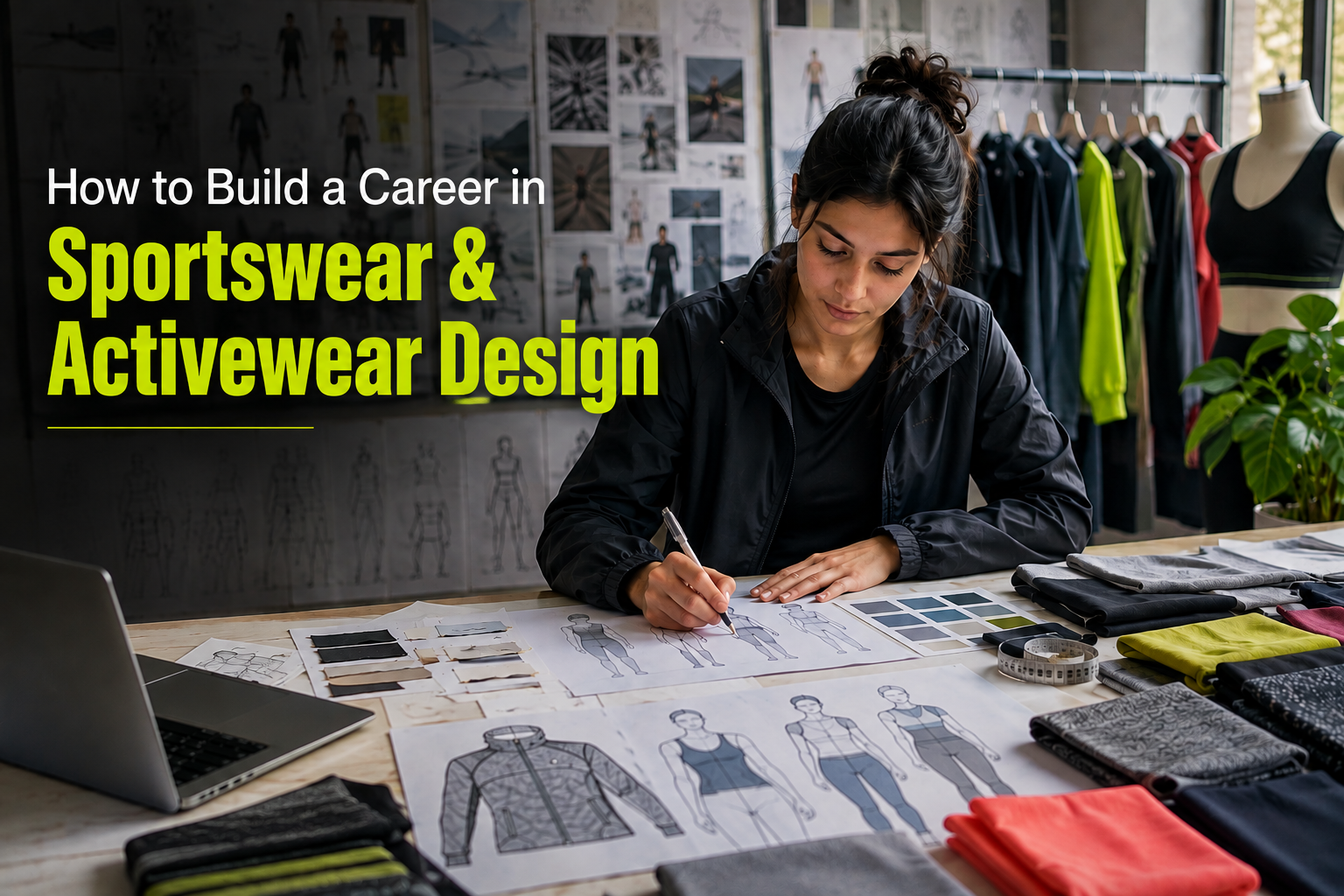
The sportswear and activewear industry has changed a lot over the past decade. What used to be a fairly specialized category aimed at athletes is now one of the more influential parts of global fashion, spanning performance running gear, yoga wear, and everyday athleisure. Consumers expect all of it to be comfortable, functional, and reasonably sustainable, not just good-looking.
That shift has created real opportunities for designers, but it’s also raised the bar. Sportswear design today isn’t just about producing an attractive garment – it requires understanding fabric behavior, body movement, and manufacturing constraints well enough to work alongside pattern makers, textile specialists, and production teams. I’ve spent the past nine years doing exactly that, split between in-house design roles and factory-side product development, and this guide draws on that experience along with input from a technical designer who reviewed it for accuracy on the manufacturing side.
If you’re considering this field, here’s what the job actually involves, the skills that matter most, and a realistic path into it.
Why This Field Has Grown So Fast
Consumer behavior data backs up what I’ve seen firsthand: activewear is no longer a category people buy for the gym and change out of. According to Statista’s 2025 apparel market report, the global activewear market crossed $400 billion, with athleisure accounting for a growing share of everyday wardrobes rather than niche fitness purchases. I’ve watched this shift inside brands too – five years ago, roughly a third of our seasonal line was “crossover” pieces meant to work from a workout into a coffee run. By 2024, that was closer to two-thirds.
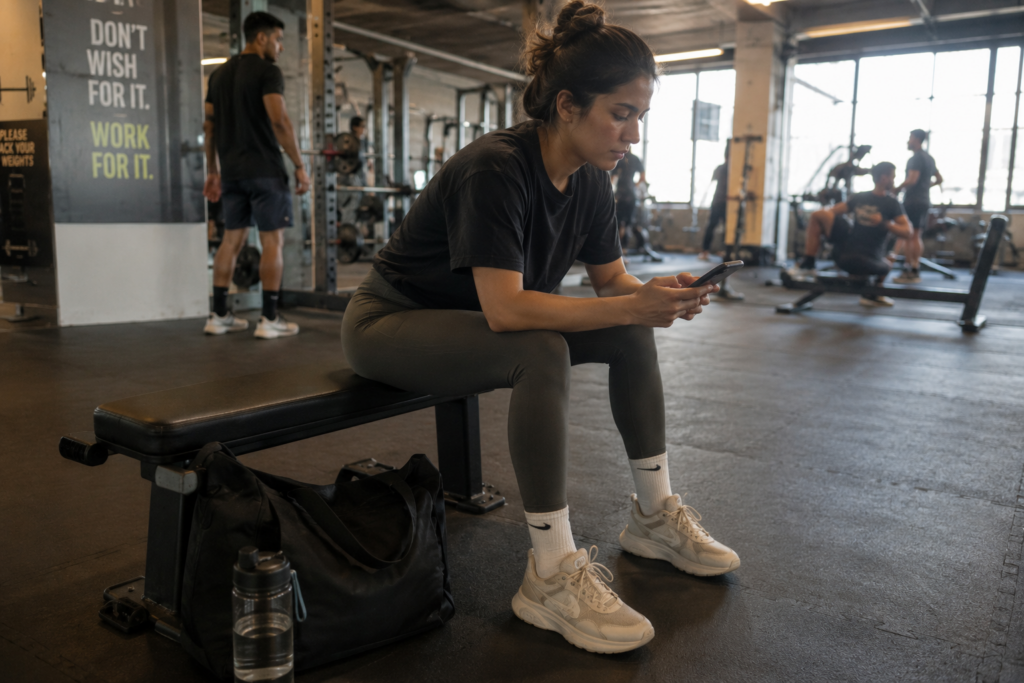
Every design decision in this category has to answer to four masters at once: performance, aesthetics, technical engineering, and cost. In conventional fashion, you can occasionally let visual appeal carry a garment. In sportswear, if the seam placement causes chafing or the fabric can’t manage sweat, the garment fails regardless of how it photographs.
What the Job Actually Involves
A sportswear designer’s day rarely starts with sketching. Mine usually starts with a fit session or a fabric swatch delivery. A realistic breakdown of responsibilities:
- Researching how a specific activity – running, cycling, yoga, hiking – stresses the body and the garment differently
- Building mood boards and concepts after functional requirements are locked, not before
- Producing technical flats and Tech Packs
- Selecting fabrics and trims against performance criteria, not just color story
- Sitting through fit sessions – often the least glamorous, most valuable part of the job
- Iterating with pattern makers and production teams until a sample survives real wear-testing
The questions I actually ask in development meetings: Will this fabric still manage moisture after 20 washes? Does this seam sit on a pressure point during a running stride? Can we hit this landed cost without cutting stretch recovery? These are engineering questions wearing a design job’s clothes.
Skills That Actually Matter
Creative fundamentals – illustration, trend forecasting, color theory, consumer profiling – remain the entry ticket. But they stop being differentiators past your first job.
Technical garment knowledge is where careers are actually built. Pattern making, stretch garment engineering, ergonomic fit, and grading are what separate a designer who can only sketch from one who can develop a product. On that running jacket I mentioned – the fix wasn’t a new sketch, it was moving a single seam 2cm and switching to a flatlock stitch. That’s a pattern-making fix, not a creative one.
Textile knowledge is non-negotiable. A quick reference I still use when briefing junior designers:
| Fabric | Common Use | Key Strength |
| Polyester | Running, training wear | Moisture management, durability, quick-dry |
| Nylon | Outdoor wear, leggings | Abrasion resistance, lightweight comfort |
| Elastane (Spandex) | Compression, yoga wear | Stretch, shape retention |
| Merino wool | Base layers | Temperature regulation, odor resistance |
| Recycled polyester | Sustainable lines | Lower environmental impact, comparable performance |
Digital tools are now table stakes, not a nice-to-have. Adobe Illustrator and Photoshop remain baseline. CLO 3D and Browzwear have genuinely changed how we work – on my last capsule collection, we cut physical sampling rounds from five to two by resolving fit and drape issues in 3D first, which saved roughly three weeks of lead time. Gerber AccuMark and Lectra show up mostly on the manufacturing side, but understanding them makes you far easier to work with as a designer.
The Real Development Process
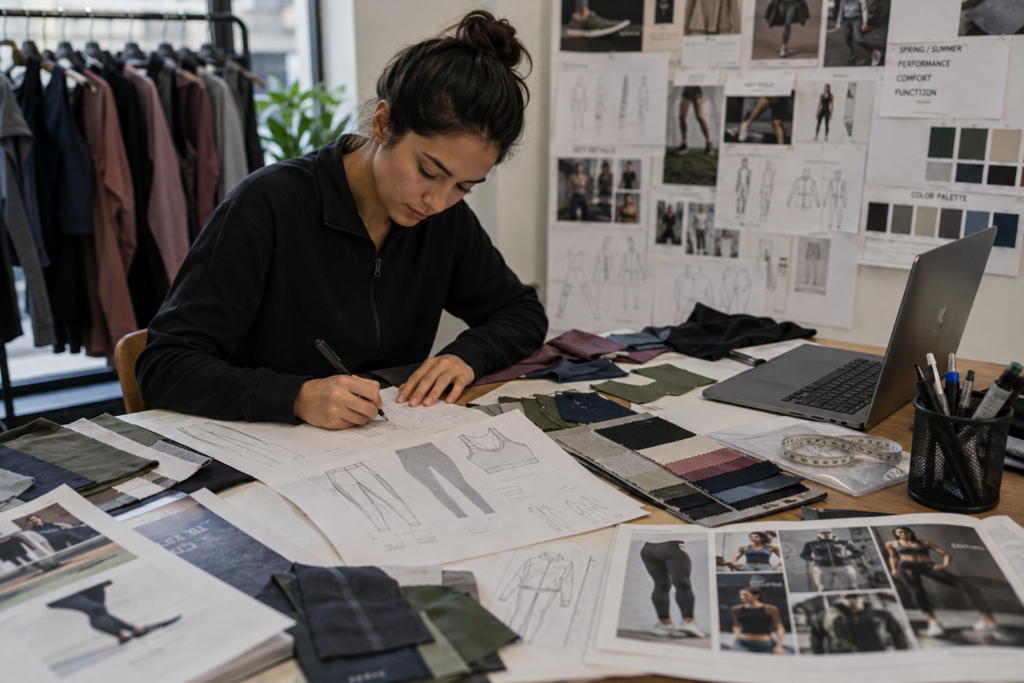
Sketching is one stage in a longer chain: consumer research → trend analysis → concept development → fabric selection → technical sketches → pattern development → digital sampling → prototype → fit testing → refinement → manufacturing. Skipping stages — especially fit testing — is how brands end up with return-rate problems. Understanding this pipeline is also what gets a junior designer invited into conversations beyond the mood board stage.
Build a Portfolio That Shows Problem-Solving, Not Just Sketches
When I review portfolios for junior hires, sketches alone rarely get a callback. What does: a clear before/after of a design problem. One candidate last year presented a brief – “design a lightweight running jacket for humid climates without sacrificing weather protection” – then walked through her fabric trials, a failed first prototype, and the mesh-panel fix that solved it. That case-study structure told me more about her hire-readiness than twenty polished sketches would have.
A strong portfolio should include: research and user insights, technical flats, fabric choices with stated reasoning, 3D renders where possible, prototype photos, and – ideally – at least one documented failure and fix.
Getting In: Education and Experience
Formal education (Fashion Design, Textile Design, Apparel Product Development, Pattern Making, Technical Design) gives structure, but I’ve hired strong designers who came up through diploma programs and self-built capsule collections. What matters more than the credential is whether you can show a full development cycle – research through prototype – on a project you actually completed.
If internships aren’t available, build one yourself: pick a specific user (trail runners, postnatal yoga practitioners, monsoon-season cyclists) and document every stage of a small capsule as if a real client were paying for it.
Tech Packs: The Skill Nobody Teaches You Enough
A Tech Pack is the document that keeps a design intact between your studio and a factory floor on the other side of the world. Rohan, who reviewed this section, put it bluntly: “I’ve received tech packs missing grading rules or trim specs, and the sample comes back wrong every time – not because the design was bad, but because the instructions were incomplete.” A standard pack includes technical flats, a Bill of Materials, construction and stitching detail, label placement, color references, grading information, and packaging instructions. Treat it as the actual product, not paperwork around the product.
Career Paths and Compensation
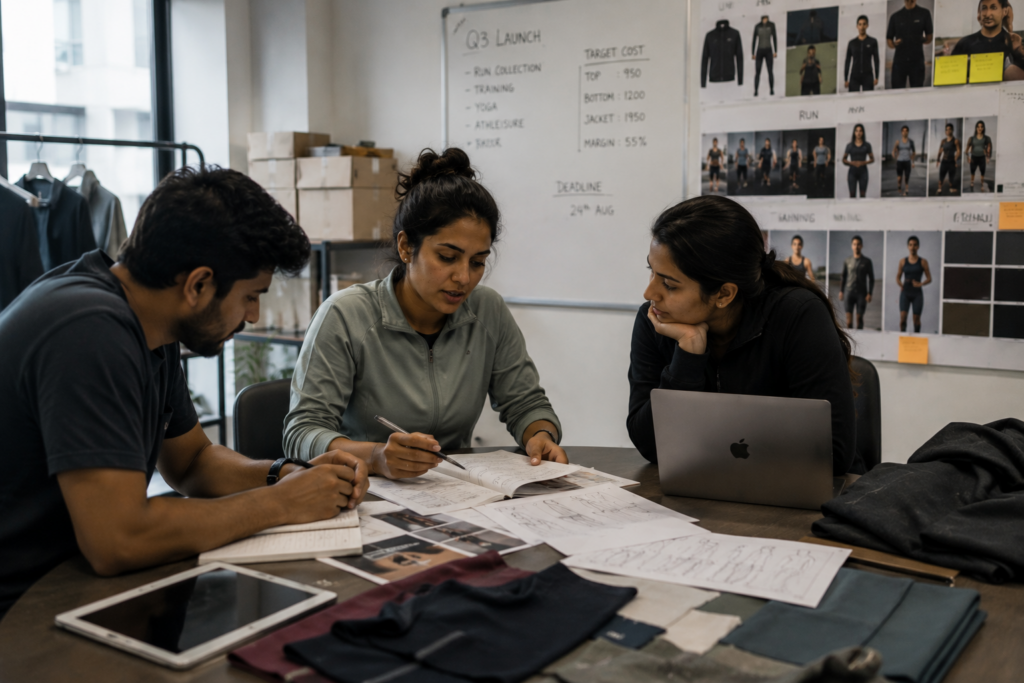
Roles branch out well beyond “designer”: Technical Designer, Product Developer, Textile Designer, Pattern Maker, Apparel CAD Designer, Product Line Manager, and independent Design Consultant.
On compensation – figures below are directional, drawn from AmbitionBox and Glassdoor India salary self-reports for apparel/fashion design roles as of early 2026, and should be treated as broad ranges rather than guarantees, since they vary significantly by city, brand tier, and specialization:
| Experience Level | Approximate Annual Salary (India) |
| Entry-level designer | ₹3 – 5 LPA |
| Junior sportswear designer | ₹5 – 8 LPA |
| Mid-level designer | ₹8 – 12 LPA |
| Senior designer | ₹12 – 20 LPA |
| Product manager / design lead | ₹20 LPA+ |
Early in your career, I’d genuinely weight technical skill-building over chasing the top of these bands – the designers I’ve seen progress fastest were the ones who could speak fluently to a factory floor, not just a mood board.
Where the Field Is Headed
Sustainability has moved from marketing add-on to core spec: recycled fibers, bio-based materials, water-saving dye processes, and circular design principles are increasingly baseline requirements from brand sourcing teams, not differentiators.
Smart textiles – temperature-regulating fabrics, conductive yarns, biometric-monitoring garments – are still mostly in pilot programs rather than mass production, but they’re where the more experimental design roles are opening up.
AI in product development is genuinely useful for trend forecasting, color palette generation, and inventory planning. It is not useful for judging whether a seam will chafe on a real body – that judgment still comes from fit sessions and human testing, and I don’t expect that to change soon.
Common Early-Career Mistakes
The pattern I see most in junior designers: prioritizing how a sketch looks over how the garment performs, skipping fabric research, submitting portfolios that are all aesthetics with no visible process, and treating feedback in fit sessions as criticism rather than data. The designers who improve fastest are the ones who treat every failed prototype as information, not a personal setback.
A Practical Roadmap
- Build foundations in garment construction, pattern making, and textiles
- Learn stretch garment engineering and grading specifically – this is the sportswear-specific technical layer
- Get functional in Illustrator, Photoshop, and at least one 3D garment tool
- Build activity-specific projects, not generic fashion collections
- Document your process, including failures, not just polished outcomes
- Seek internships or build self-initiated capsule collections
- Stay current on sustainable materials and digital sampling workflows
- Build real relationships with technical designers and product developers – they’ll teach you things design school won’t
FAQ
Is sportswear design different from fashion design? Yes – it adds ergonomics, performance fabric behavior, and durability requirements on top of aesthetics.
Do I need a fashion degree? It helps, but a strong technical portfolio and demonstrated fit-testing experience can substitute for a formal degree in many hiring processes.
Which software should I prioritize? Illustrator and Photoshop first, then a 3D tool like CLO 3D – it’s become close to a baseline expectation at mid-size and larger brands as of 2026.
Is this a good career to enter in 2026? Demand remains strong, driven by athleisure growth and sustainability requirements, though competition for entry-level design roles (versus technical/product roles) has increased.
Can I start my own activewear brand? Yes – most founders I know in this space spent 3 – 5 years in product development or sourcing roles first, which is where you actually learn the business constraints a design degree doesn’t teach.